Bob brought us his latest addition to his fleet, a 2020 Chevrolet C8 Corvette, to have us unleash some bald eagles from the 6.2L V8!
Performed by us:
- American Racing Headers 1.78″ primary ID long-tube headers

Bob brought us his latest addition to his fleet, a 2020 Chevrolet C8 Corvette, to have us unleash some bald eagles from the 6.2L V8!

As car enthusiasts, we customize nearly everything we can get our hands on. From cars and beyond, the passion to personalize and make something reflect who you are lives through us no matter the passion.
We see each car that we work on as a piece of art. Perfectly tailored for the owner’s needs and dreams. It was with this thought that we decided to start a new way to bring that National Speed personalization to our community; Wallpaper Wednesday.
Each Wednesday, we’ll be sharing a custom National Speed Wallpaper for both desktop and mobile, and easily downloaded below! Just right-click and “Save As”, or hold to save on mobile, to get these images saved and posted up as wallpapers on your phone or computer.
This week, we’re featuring Christopher’s AWE Exhaust-equipped 2020 Chevrolet C8 Corvette Stingray, aptly personalized “prec8 it”.

The AWE Tuning Touring Exhaust really brings the LT2 exhaust note to a new level, creating a roar from what was once a grumble.
Download the desktop and mobile wallpapers here and stay tuned for next week’s Wallpaper Wednesday.


Over the past 5 years, Mopar has been flipping the script on what is expected from an OEM giant. With a lineup of multiple 500+hp cars, trucks, and SUVs and even more awe-inducing trims within each model, the power potential from the new generation of HEMI’s cannot be overlooked.
But we’re enthusiasts, we couldn’t leave a car stock if we had to. It’s just not the way we function. So the question arises, which modifications should you do first and which are the best or most productive modifications?

Through all of our Mopar projects over the years, we’ve been able to identify the common denominators between the best performing setups in the industry and find out how we can give our customers this performance. That’s why we now offer our National Speed Staged Packages, to help take some of the guesswork out of the build process. Each Staged Package will help to take a stock vehicle to the next level with a methodical approach to the most common vehicle limitations. The following Top 5 mods can be found in one or more of the staged packages and it is up to you which package to shoot for, based on your performance goals.

JLT Performance Cold Air Intake
There’s few things more renowned as the essential first modification than the Cold Air Intake, or CAI for short. It is one of the first upgrades we do on most vehicles to help build a solid foundation for other performance modifications. A CAI intake prevents hot air from entering the engine and allows more air flow. The result: more air, more oxygen, and more power to the wheels! Not only is performance improved, but it changes the way the vehicle sounds, adding an audible “whoosh” as the throttle is depressed and released.
A good CAI must have big openings for airflow with little restriction via airboxes, resonators, and other components, and most importantly must be in a prime location for grabbing cool air from outside the engine bay. For a long time, manufacturers have been locating the air filter below the car which is great for airflow but can cause serious hydrolock issues in the wet. There’s a million cold air intakes out there, but we’ve done the research to isolate a product that does everything we need it to with an excellent build quality.

The team over at JLT Performance knows exactly how to design an excellent CAI. With incredible build quality and even better performance, we rely on JLT Performance intakes for the majority of our Mopar projects. The kit includes a fully roto-molded airbox with an opening in the front to grab fresh air from the grille/headlight area and also seals to the hood. This key component really makes the difference when it comes to efficiency and a well put together kit. The intake tube is also roto-molded plastic instead of metal to avoid heat soak, with a huge 5″ filer opening for incredible airflow. With a mouth of 4″ at the throttle body end, it is ready for any larger throttle bodies that may come in the future.

Stainless Works Long Tube Headers
One of the biggest themes of building a car for performance is the continued emphasis on airflow, from the intake to the exhaust, most specifically long tube headers, and our choice has always been Stainless Works.
Built from corrosion resistant 304 stainless steel, these headers are fabricated for strength and durability right in Streetsboro, Ohio. We can’t help but give a little extra love when something quality is made in America!

These headers come in 1-7/8″ Or 2″ primary tubes, which can help with clearance and fitment for those tight fits. We really like these headers for Mopars due to the smooth mandrel bends that really do a lot to optimize exhaust flow from the drivetrain. The build quality is always A1 as well with fully TIG welded for strength and beauty. These headers really do represent the idea of “show and go.”

Camshafts are one of those parts in the automotive community that gets everyone speaking in a different language, with conversations about life, duration, lobe size, overlap and more. It’s one of the areas that really separate the casual car guys from the tech-minded folks. There are a million custom houses and manufacturers that make cams for all sorts of applications, but after 15 years of building cars, we know the quality and performance expected from a camshaft from COMP Cams.
We swear by the COMP Cams Stage-2 HRT 273 camshaft for 5.7L and COMP Cams Stage-2 HRT 275 camshaft for 6.4L. The included kit has everything needed and these cam packages can add +82 HP on average. We also see the best average torque & power of any sub .600″ lift Gen III HEMI cam we’ve ever used or heard of. With the optimal power range from 2500-6500 RPM, this cam produces prime output throughout the powerband.

With an illustrious history like COMP Cams, it’s hard to find a better option for most builds! We trust COMP because of their race-proven history, building insane power cars and putting them to the test for over 45 years. So many of the best innovations in the automotive industry come from the successes found in racing and COMP Cams is no stranger. This is why we trust COMP Cams for each of our staged package builds.
Cams are a great way to make power but require a large amount of measurements and research to find out which is best for you. Which is one reason why we’ve started putting together staged packages, as a means of eliminating the guesswork for what works best with your Mopar, regardless of year, make, or model.

One of the most well-known ways of adding power to your Mopar is by way of a supercharger. There are really two kinds of superchargers, Positive Displacement (Twin Screw & Roots) and Centrifugal. While there may be a ton of confusion out on the internet, to make it simple, the Positive Displacement sits on top of the V-bank and makes that famous whine whereas the Centrifugal sits in the engine bay, similar to the snail-like look of a turbo and makes a massive whoosh at full throttle and let off.
Centrifugal Superchargers are well known through the aftermarket industry with names such as Procharger, Vortech, and Paxton Superchargers. Whereas the major names in positive displacement are Eaton, Magnuson, and Whipple. Positive Displacement Superchargers are more often used by OEMs and have been popular in performance builds for generations. The unmistakable look of the 6.2L Hellcat motor features a 2.4L twin screw supercharger, center stage in the engine bay.

The biggest change in the game came with the introduction of the twin screw supercharger, the more efficient and powerful evolution of the original roots-style supercharger. The main keys here are the design of the rotors inside the supercharger, as early roots-style were improved upon by more efficient rotor design for better boost. With everything in the automotive industry, there is no passing of time without innovation and the leaps and bounds in which manufacturers have progressed with this technology have been inspiring to say the least, and Whipple has been on the leading edge of this innovation.
For our supercharged staged packages, we always recommend a Whipple Supercharger, and with the 2.9L being phased out as we welcome the new 3.0L unit, we can’t wait to see the results roll in. From our research and experience, we’re expecting gains of 130-160hp for 5.7L and 160-220hp for 6.4L from our Supercharged Packages, featuring the new Whipple Gen 5 3.0L Supercharger!

All of these parts we’ve discussed are important, crucial in fact. However, there’s one performance modification that must be made in order to make all the pieces fall together, and that’s a calibration.
A calibration, or “tune”, is what allows a drivetrain to make more power by changing the coding of the ECU, or in the case of Mopars, the PCM or Powertrain Control Module (another fancy name for an ECU). From the factory, your PCM is set by the Mopar engineers for the optimal performance of the engine under the most general of circumstances, variances in fuel, driving habits, maintenance, and more.
OEMs like Fiat-Chrysler, Mopar’s parent company, will always design their cars with the intent of the vehicle lasting for an extended amount of time in order to create a reliable product and owner experience as well as minimize warranty claims. This is mainly because despite the fact that they can never know exactly how the car will be maintained, they still need to ensure reliability.

We take this same intent into mind when tuning your Mopar but with a more performance-focused mindset. While we make sure that we tune for and build tolerances into your tune in order to keep the good times rolling, we also make the most of your build set up and the modifications made to your build as you would drive it personally. A truly custom calibration based on your driving habits and performance modifications.
What our custom calibration does is reset the OEM data maps that mark the factory optimized performance of the drivetrain and adjust and remap the air/fuel ratios, ignition and cam timings, and torque management to come together to create an data map that balances the performance of the engine and modifications with the tolerances needed to perform consistently and repeatedly.
Our expert calibration team can understand these complex ratios and maps to tune your Mopar with nearly any software on the market, however, we find the best results by way of a custom calibration via HP Tuners on our Dynojet 424xLC2 dyno for the most minute details of tuning, getting every last ounce of power while making sure that the drivetrain can consistently make that power without issue.
Our tunes are always thoroughly worked through for prime efficiency, reliability, and of course performance! Whereas you might see massive numbers proclaimed by others with the same parts, the tune may be teetering on the edge, which is why we always make sure that we tune your Mopar to make the same power, the same way, everyday without fail.

The world of automotive aftermarket is massive and ever expanding. As Mopar has pushed the boundaries of what a factory car can do over the past five years, so has the aftermarket in order to keep up and always push forward. That’s what we love about this community, we’re always trying to improve and innovate to do more and have more fun. That’s why we’re here to help everyone get in on the fun without doing weeks worth of research. We hope this article helped narrow down your choices as you start thinking about building out your HEMI, whether it’s a Charger, Challenger, SUV, Truck, or 300c.
Reach out to National Speed to get your Mopar up to speed and check out the gallery below for more Mopar!
[ngg src=”galleries” ids=”493″ display=”basic_thumbnail” thumbnail_crop=”0″]


One of the best parts of being in the automotive community and building cars is seeing the different evolutions and phases of builds through the years. Victor White’s Subaru STI is a great example of this.
Victor came to us with his 2008 Subaru STI ready for the next phase of its life, going from a built motor to an insane IAG Tuff Stage 4 Short Block with Stage 5 heads with a big Precision 6870 Turbo.

We were as excited as Victor was for this next phase of his GR STI, so we pulled it in and got to work! First things first, out went the old built motor, ready for it’s next life in a new chassis, and we started getting the bay ready for the new IAG Performance Short Block. Topping off the motor is a Process West intake manifold alongside the massive 6870 Turbo from Precision Turbo and 44m waste gates from TiAL.
As we assembled the block, we couldn’t help but admire how great it looked. There’s something about engine components that strike the eye just right.

Even with as good as it looked, Victor wanted to take the aesthetics to the next level. To match his gold wheels and set off the engine bay, the IAG Fuel Rails and top feed TGV housings were anodized gold.

To fuel this golden powerplant, twin Walbro 450lph fuel pumps were installed and run with a COBB tuning flex fuel kit in order to make the most of the E85 compatibility and potential power gains.
With big power Subaru builds like this, the factory top mounted intercooler just doesn’t get the air needed to keep the engine cool and in proper boost, so we tapped the team at Extreme Turbo Systems for a front mount intercooler kit, powdercoated gold to match the rest of the accent pieces.

Sometimes, custom builds require custom work, and that’s where our custom fabricating team comes in handy! Our Performance Technician, Alex, got to work fabricating everything needed to finish up the build, from a custom fabricated coolant reservoir to fuel lines and turbo piping. With Alex’s custom work and some fittings from Vibrant Performance, Fragola Performance, and Radium Engineering, the motor was ready to go!
With the motor buttoned up, turbo piped up, and intercooler mounted in the front, it was time to move on to supporting the boosted bomb under the hood.

To help the transmission handle the boost in power, we installed chromoly billet transfer gears along with a triple disk competition clutch and flywheel from IAG Performance. DSS Axles were also installed to help put the power down to all four wheels.
Keeping the build functional and just as good as stopping as going, the brakes were swapped out for EBS Brakes GD Rotors and Yellow Stuff Pads. Running to each corner are stainless steel brake lines from StopTech.

With the build all set, the only thing left was to get tuning. We strapped the STI on the rollers and let it rip!
After working the COBB Accessport and laying down an impressive 816whp and 669lb/ft of torque on E85, Victor’s STI was reborn into its new phase of life, as an absolute monster!

We love being able to help other enthusiasts make their performance dreams a reality, and Victor’s build was another great example of that! We can’t wait to see what else he has in store for his STI hatch.
Parts List:
For a closer look at this build, take a look at the gallery below.
[ngg src=”galleries” ids=”492″ display=”basic_thumbnail” thumbnail_crop=”0″]

 When you think of common mods for Toyota Tacomas nowadays, you think suspension, bumpers, bed racks, etc.
But Scott had a better idea…boost!
Scott came to us with a simple goal, to pick up the pace in this 2019 Toyota Tacoma and get the V6 boosted with the help of a supercharger. Luckily, we knew how to make it happen.

With Scott’s Tacoma in the garage and our amazing team under the hood, we got to work on forcing some induction on the 3.5L. Magnuson’s TVS1900 System is a great option for boosting the third generation Tacoma, really due to the unit’s thermal efficiency, resulting in reliable and considerable gains on the rollers.
The parts of the kit itself were beautiful and of course the great quality that Magnuson always delivers. There are few things more appealing than freshly machined aluminum in our eyes.

After getting the motor buttoned up and filled with Mobil 1, our team at the Wilmington shop and calibrator Vlad got Scott’s Tacoma on the rollers and set for tuning.
Achieving what he had sought out for, Scott’s Tacoma put down 310whp and 290lbft of torque, nearly 100hp and 50lbft in gains!

With goals met and the Tacoma ready to go, we can’t wait to see what Scott does with it! Let us know if your Tacoma needs a similar boost.
For a closer look at this build, take a look at the gallery below.
[ngg src=”galleries” ids=”491″ display=”basic_thumbnail” thumbnail_crop=”0″]

Certain icons stand out in history as pillars of automotive history. For Ford and Shelby, the Cobra is one of those very icons. From the original Shelby to the current GT500s, that snake has always represented one thing, unrelenting performance.

The key to unrelenting performance is, of course, making that performance reliable and steadfast. When building beyond the capabilities from the factory, this key becomes all the more important.
Anthony brought in his new-to-him supercharged 1999 SVT Cobra looking for a built bottom end to keep his Cobra’s performance unrelenting. On such a special build, featuring a full Terminator swap with rare parts, including some super rare euro tail lights, we knew that we would be able to make this Terminator-swapped Cobra a force to be reckoned with.

With the stock block not able to handle the current power efficiently and reliably, he worked with our performance consultants and build designers to figure out the best way to keep the power pumping and his motor running like a champ.
The solution sounded simple, a new short block built to withstand the new power and more. However, the reality was much more interesting.

Instead of just any new short block, we sourced a MMR Romeo Short Block, cast iron but with forged I-Beam rods and Manley Forged Pistons. This new beefed up short block would be more than capable to handle the extra power and boost the twin screw blower would send through the 4.6L DOHC V8. Andrew got to work resealing the engine with Fel-Pro gaskets and ARP hardware to make sure that it was sealed and torqued properly. Process is a huge part of what makes a difference during a build and we’re always focused on doing things the right way.

Forged internals are a great way to make the most of any standard cast iron block. And by pairing forged internals with a short block designed specifically for forced induction, Anthony’s Cobra was stronger than ever and ready to be back in business!
To give the Cobra some extra grunt, some PaceSetters full length headers, ceramic coated by our friends at Wild Things Powdercoating, and a custom-fabricated X-Pipe were added while the motor was out. With the engine setup ready to go, we got the car buttoned up and ready for the dyno!

After getting strapped in, dialed in, and a custom tune from our calibrator Vlad via SCT X4, Anthony’s Cobra put down an impressive 492whp and 450lbft of torque!


We couldn’t let this one go without a full shoot out back at the shop in Wilmington. For a closer look at this build, take a look at the gallery below.
Reach out to National Speed today to see what we can do for you!
Parts List:


There’s always some enthusiasts who connect with a specific car and just develop a passion that brings that model to the absolute pinnacle of their vision. We’ve seen it all the time, from domestics to imports. Every car enthusiast makes this connection to some extent.
One prime example of this is Bryan. Bryan loves Foxbody Mustangs more than almost anyone does, we’re willing to bet. When Bryan first came to us, he had a plan for not one, but two Foxbody builds, a 1989 and a 1993, with distinctly different visions for both. The best of both worlds if you will. We couldn’t have been more excited to take these on and bring this twin Foxbody vision to life.

First up, this absolutely stunning 1989 model year, was to be a simple build with ties to the OEM nostalgic setup, but with the addition of a built transmission and some boost! Putting the pressure down on the 5.0L 302 is a Vortech Superchargers V-3 Si-Trim Supercharger System.
Bringing life to the motor setup, we swapped out the injectors and spark plugs, using NGK and Ford Racing parts, including Ford Racing 47lb EV6 fuel injectors with a Brian Tooley Racing EV1 to EV6 adapter for proper fitting without having to modify the factory wiring harness.

To beef up the drivetrain while running through the gears, we reached out to the team at Monster Transmission & Performance to help Bryan with a heavy duty 4 Speed AOD Transmission. To compliment this truly monster gearbox, we upgraded all the components surrounding, from an ATP Automotive flex plate to pedal and shift linkage bushings from Dorman Products. All the epic parts in the world can’t do their best if the support for them is aged and worn!
To keep this Fox breathing clear, we swapped out the headers and X-Pipe for some quality parts from the team at BBK Performance Parts. To keep everything regulated, the radiator and thermostat were replaced and upgraded with a Motorad 180 thermostat and Mishimoto aluminum radiator with a dual fan system from Ron Francis Wiring to keep the air flowing and the engine cool.

With the mechanical work wrapped up in the shop by John, Matt strapped her down to the rollers for Vlad to perform a custom calibration via SCT Performance! With 93 octane in the tank and the Vortech V-3 Si delivering ~8psi, Vlad increased the 5.0L HO 302’s output to a solid 306.43whp & 359.59lbft!
Next up is Bryan’s 1993 Foxbody Mustang SVT, getting set for an Edelbrock supercharged Coyote swap and 9 inch rear! We can’t wait to see these two together when they’re both finished. More progress coming soon, so stay tuned for updates!

For a closer look at this build, take a look at the full gallery below.
Reach out to National Speed today to see what we can do for you!
Full modification list performed by us below:
[ngg src=”galleries” ids=”489″ display=”basic_thumbnail” thumbnail_crop=”0″]

Many people dream of being able to cross the quarter mile line in under ten seconds, and now most days with enough determination and work you can make it happen. However, things start to change beyond that.
Torsten came to us with one of the greatest platforms for attempting the feat of a monster quarter mile time, a 2009 Nissan GT-R, and an ambitious goal, to design and create a car that is both daily drivable and able to achieve a quarter mile time in the low 8 second range. We were happy to oblige him and take on this project.

Our Performance Consultation team met with Torsten to create a game plan to make his dream of an 8-second daily a reality. It’s always a pleasure to work out the vision with our clients. With Torsten wanting the best of both worlds, a daily driver with a blistering quarter mile time, our build team began from the bare bones. The VR38DETT was pulled from the bay and was replaced with an Alpha Performance 3.8L Short Block to create a near bulletproof base with 1000hp+ potential for this monster daily.

Topped with a Boost Logic V2 intake manifold with 12 Injector Dynamics ID1050x injectors, ported heads from HeadGames Motorworks were installed along with Stage-2 camshafts from Kelford Cams and a GSC valvetrain to finish up the top end with strength and durability.
To crank up the boost, the stock turbos were replaced with quick spooling Extreme Turbo Systems G-Series GTX3582R Gen-2 Turbochargers.
Alpha Performance also supplied the Omega twin-pump brushless fuel pump system along with other fuel system components from T1 Race Development and COBB Tuning, completing the fuel system.
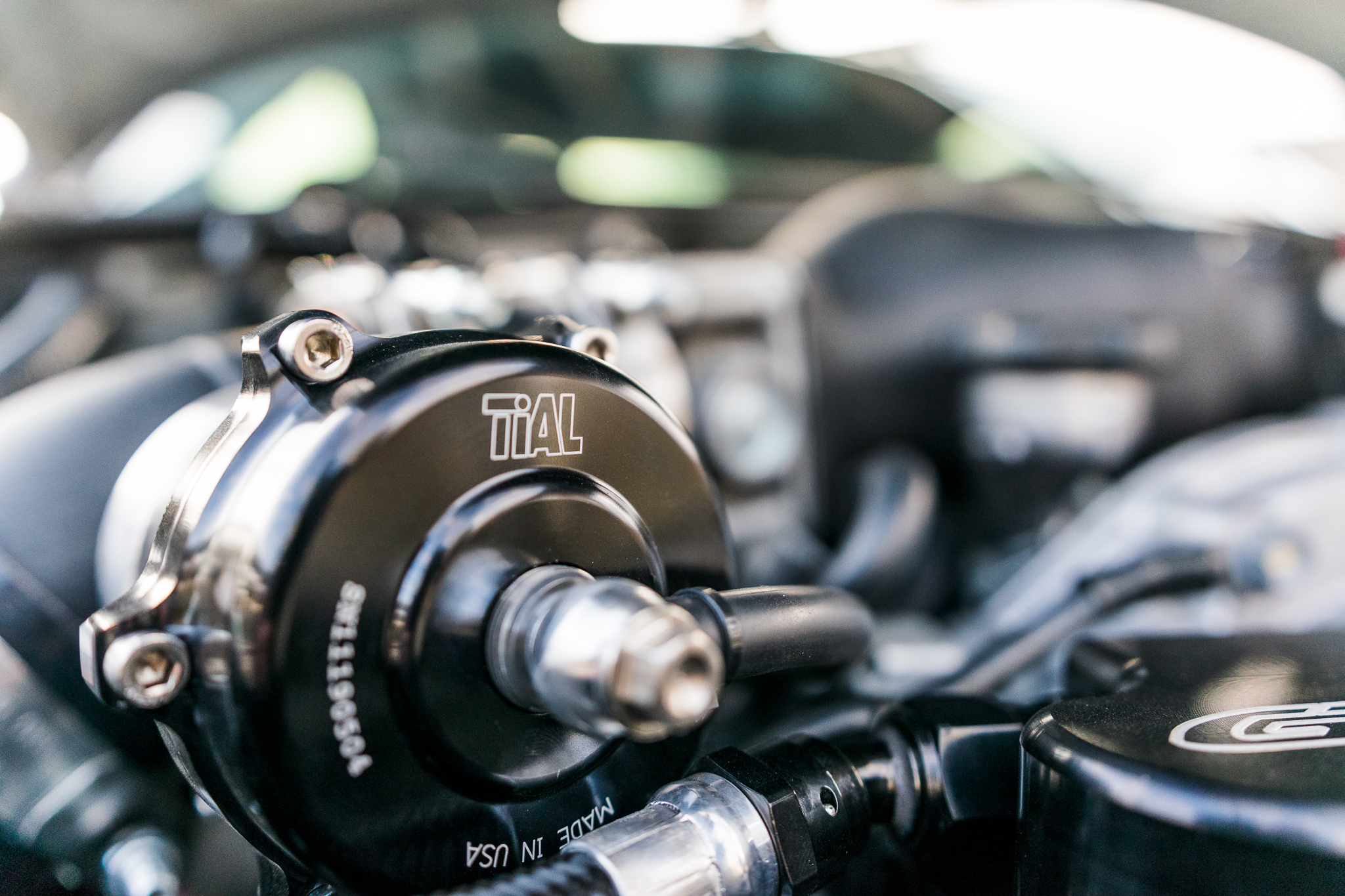
In order to let her eat, we have to let her breathe, and with an Extreme Turbo Systems race intercooler system with TiAL Sport Q 50mm blow-off valves, we were able to support the turbo system and achieve our 1000HP+ goal. Our friends at Extreme Turbo Systems also supplied the 3.5” to 4” Pro Series Y-Pipe to 4” Exhaust, getting us that signature VR38 sound.
Keeping everything together are ARP Fasteners and Genuine Nissan OEM gaskets, seals, and other miscellaneous components used to assemble the engine. With the end product being a daily driver that is able to hit Torsten’s goal of low 8-second passes, we had to make sure that this engine was solid and efficient for run after run, followed by the drive back home.
The team at Jack’s Transmissions put together the perfect gearbox for this build, a fully built Drag 1000 GR6 Transmission, taking all the raw power from the Alpha VR38 and sending it to all four wheels.
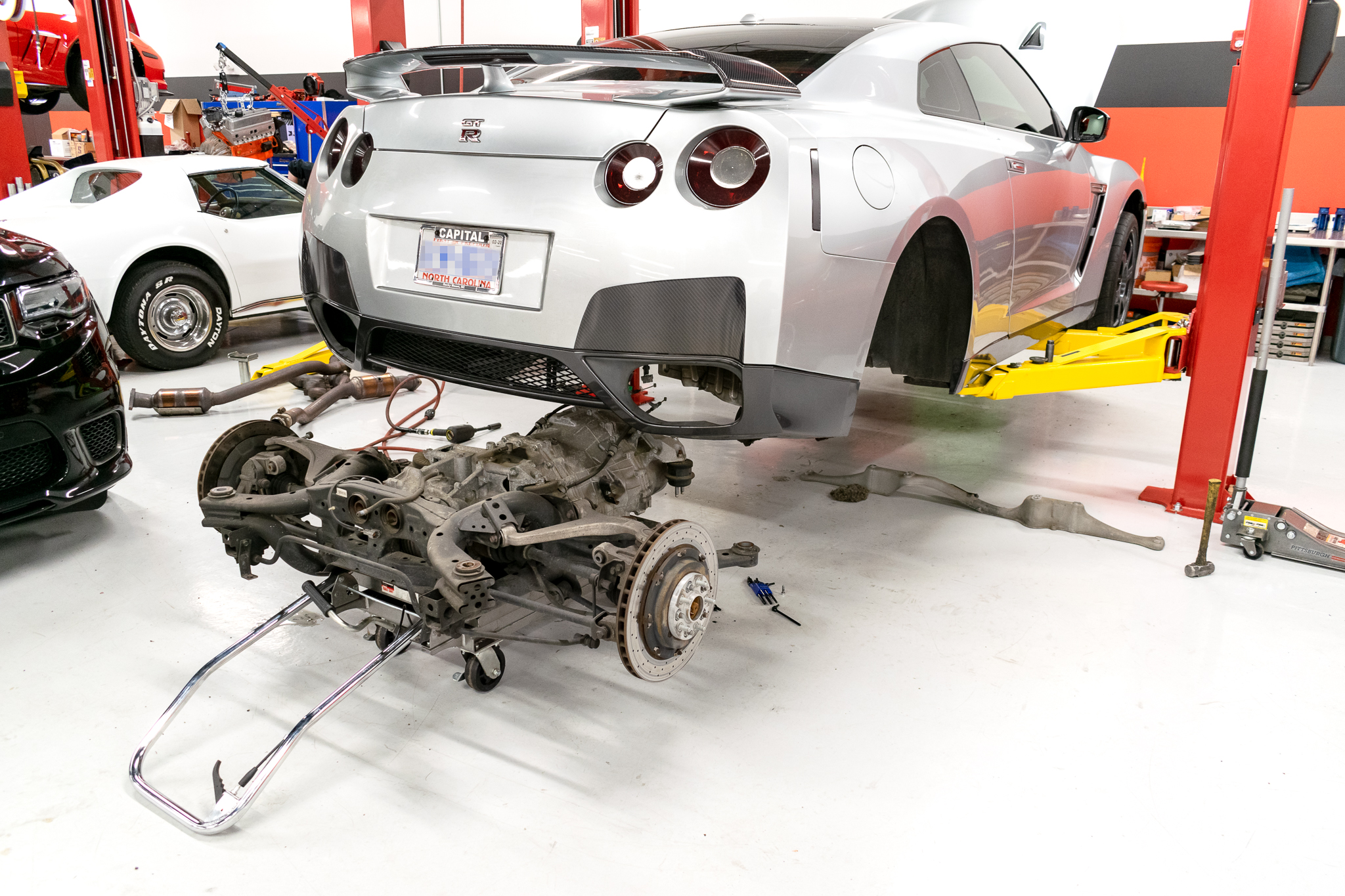
In order to put all this power to the ground successfully and reliably, we tapped the team at Driveshaft Shop to get a 1000HP+ Pro-Level rear axle, hub, and differential stub kit built and ready for Torsten’s GT-R. Tuning the all-wheel drive system is key to a successful launch, so we used a STM Tuned AWD controller to fine tune the power delivery.
To help Torsten control this beast, we finished up the build with an Alcon big brake kit in the front and rear and wrapped his wheels with some sticky Toyo R888R Tires.

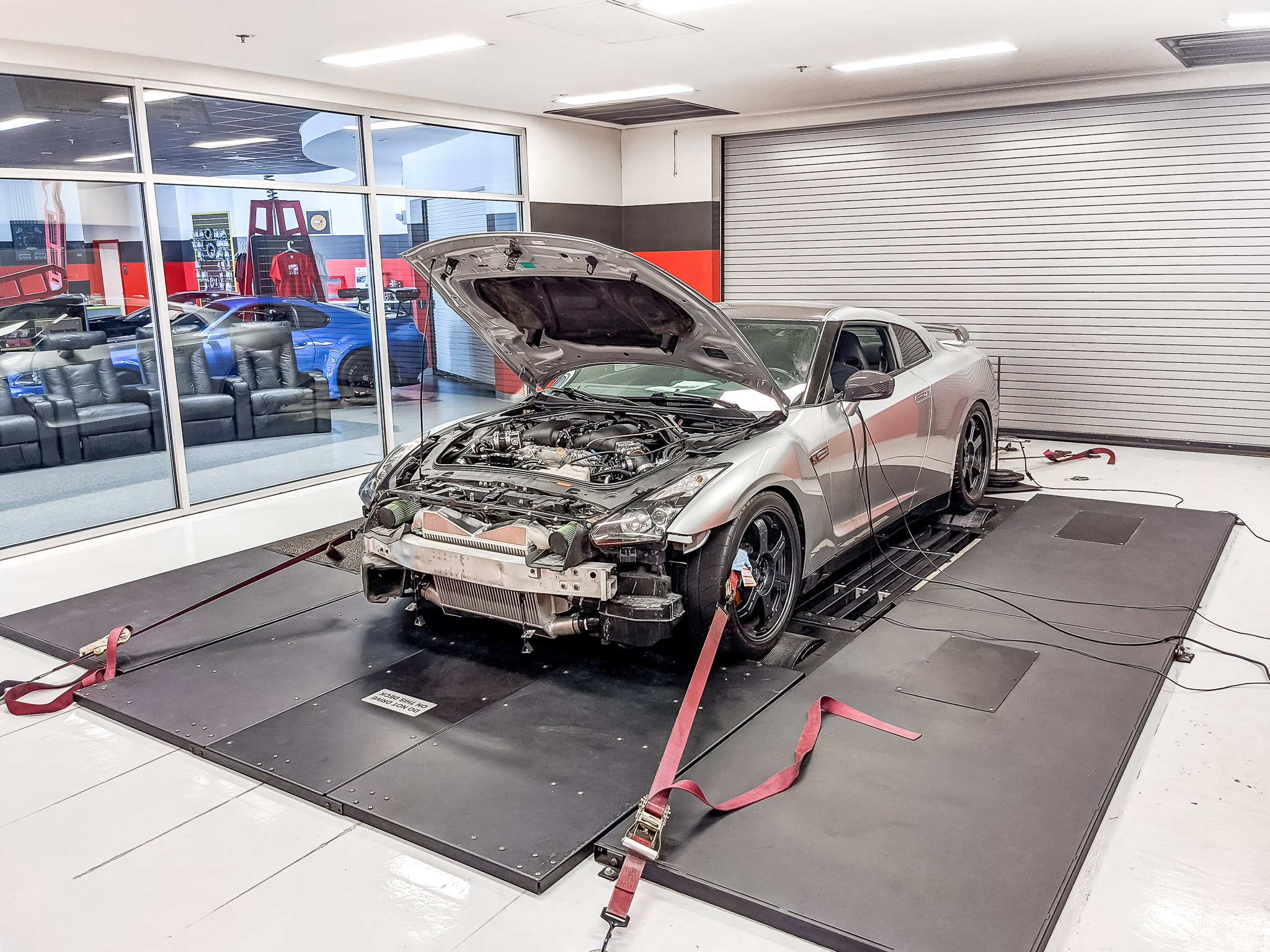
With all the pieces finally together and ready for tuning, Torsten’s GT-R hit our in-house dyno to see what it could do. Using the COBB Tuning Accessport V3 with TCM Support, our tuning team calibrated the system for Flex Fuel capability for ultimate control over the car and tunes. For our dyno tests, we would be testing with standard 93 octane and E85.
Strapped down and with our ears singing with the glory of it’s fully built VR38, Torsten’s GT-R exceeded our goals and laid down a mighty 1,355whp and 972lbft of torque on E85 and a comfortable 882whp and 664lbft of torque on your everyday 93 octane.
To celebrate, we unstrapped the car and took it out for a quick shoot and loved everything we saw. This GT-R is truly a wolf in sheep’s clothing.
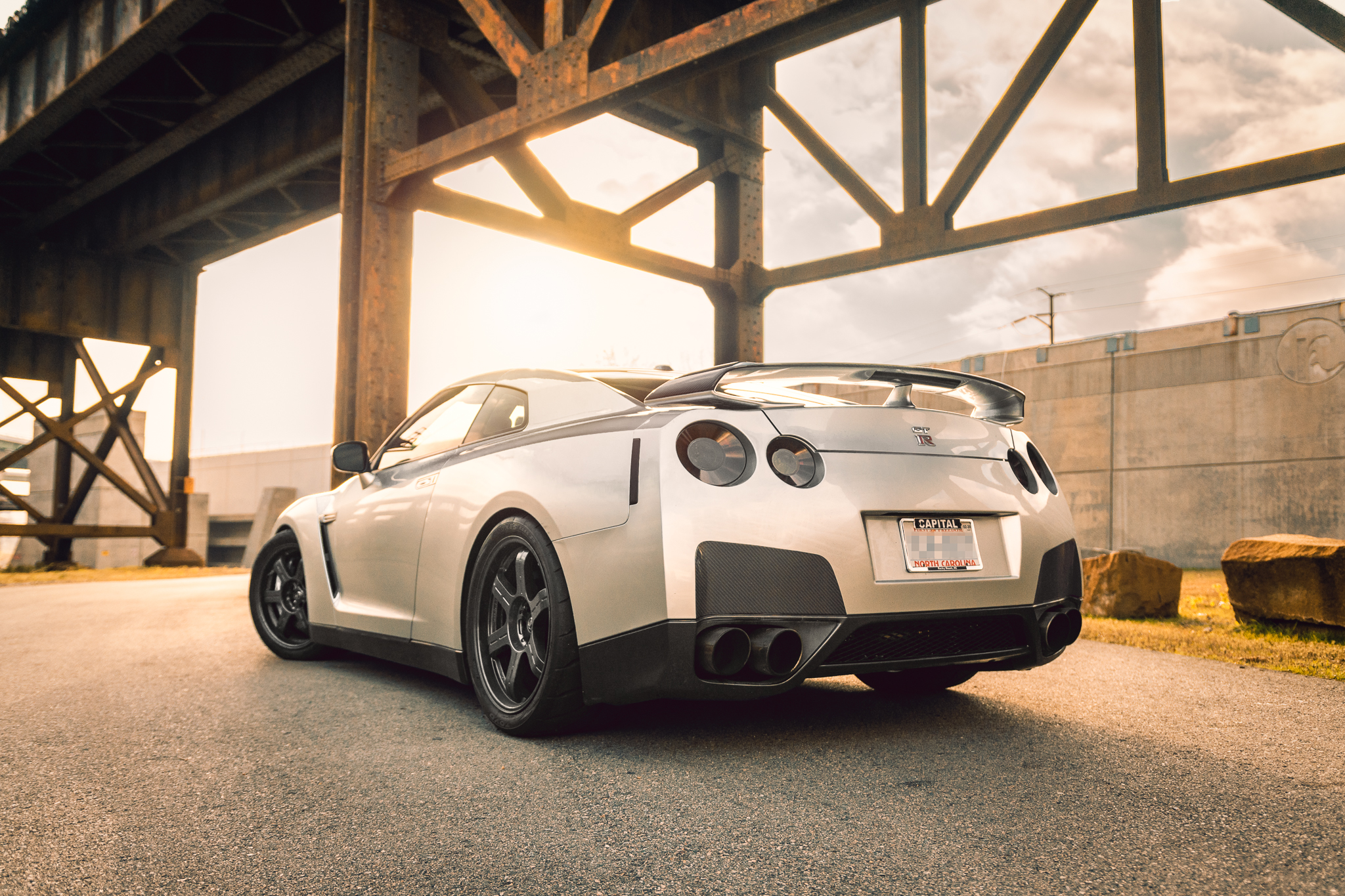
With the beast built and our goals achieved, we’re looking forward to seeing what Torsten and his GT-R can do at the drag strip. Knowing the great things our team can do, we expect to see a low 8 slip in the very near future.
Torsten’s GT-R build is a reminder that no goals are unachievable with the right team and determination.
For a closer look at this build, take a look at the full gallery.
Reach out to National Speed today to see what we can do for you!

Deeper into the 9’s we go, with an assiduous quest for 8’s!
Sean has been a long time National Speed client and GM performance car fanatic, owning and restoring a gorgeous 1964 Nova SS, and for the past couple years, his dedicated performance car, a Mosaic Black Metallic 2016 Chevrolet Camaro SS.

For the latest evolution of Sean’s never-ending quest for more power, a simple goal was laid out: 850+whp on 93 octane.
The car has lived through several iterations over the five years of Sean’s ownership, starting from a bone-stock, brand new platform straight from the dealership. While all was fine for a while, Sean had a craving for something more, and after spending multiple weekends at the dragstrip, the need for more power could not be contained.
With the original engine-out build yielding him some great results. throwing down a tire-slaying 9.98 quarter mile at Coastal Plains Raceway Park Dragway, it was clear the existing setup needed to be updated. Unable to suppress the desire to see how far we could really push the LT1, a plan was set in place to completely tear down and rebuild the 6.2L LT1...for the second time.

With the Camaro back in the shop, our Performance Technician, John, made quick work pulling the engine from the car, tearing it down to the bare short block. From there, he meticulously gapped each piston ring to the exact spec needed and in went a Gwatney Performance Innovation complete drop-in piston & rod package. This specific package includes Diamond Pistons 2618 pistons with rings, Callies Performance Products 6.125″ connecting rods, connecting rod bearings, heavy duty wrist pins, locks, and rings. To compliment the new pistons and rods installed, in went a custom designed 5150 billet-core VVT camshaft from Cam Motion.
While John was working away on the bottom end, we tapped the great team at Gwatney Performance Innovation again for their ported cylinder head service and installation of Brian Tooley Racing valve spring set. Once the heads were finished with their revamp, John finished up the engine internals with a COMP Cams high pressure fuel pump lash cap, OEM LS7 rocker arm pad, and all the various gaskets and seals to complete the installation.

With the internals beefed up and the motor dropped back in, it was time to work on some more power! While Sean was able to make a solid 740.05whp & 694.24lbft on E50 at only ~12.5psi on his old setup, a Magnuson Superchargers Heartbeat TVS2300 supercharger, we decided to up the ante and go with an even bigger setup from Magnuson Superchargers, the Magnum DI TVS2650R! To dial in more boost, a smaller upper pulley was needed, so John swapped out the existing upper pulley for a smaller 80mm unit, then added a 103mm SD103LTX throttle body upgrade from Williams Performance, allowing the most amount of air into the TVS2650R. Finishing up the engine build, John installed a set of LTR7IX-11 spark plugs from NGK Spark Plugs attached to a set of premium spark plug wires from Katech.

With the drivetrain set, it was time to figure out how to get the power to the ground. The stock wheels, control arms, and wheel & brake hub setup were all removed and replaced with a 15” conversion from Carlyle Racing. The stock set was quickly replaced with a set of gorgeous WELD Racing 15×10 S71B Non Beadlock wheels wrapped in Mickey Thompson Performance Tires & Wheels 275/60/15 ET Street S/S radials. To help the car stage correctly and to get heat into those new meaty tires, a line lock kit from SJM Manufacturing, Inc. was installed allowing the front brakes to lock up independently from the rear brakes.
With all the parts installed and mechanical work wrapped up in the shop by John, our Calibration Assistant, Matt, strapped her down to the rollers for Vlad to perform a custom calibration via HP Tuners. With 93 octane in the tank and the Magnuson TVS2650R delivering around 16psi, Vlad and the National Speed team were able to increase the LT1’s output to a kick-ass 863.71whp & 742.04lbft!

For Sean, power has come in stages, originally seeing 546.80whp & 545.77lbft with bolt-ons, 740.05whp & 694.24lbft with the first build, and now with the current setup, 863.71whp & 742.04lbft! With the factory direct-injection system being the only limiting factor in this build, the temptation to switch over to LS-based port-injection is already on Sean’s mind. Hopefully we will see him back here for more fueling upgrades and tap into the 900-1000whp range, finally reaching his goal of 8 second quarter mile times!
Reach out to National Speed today to see what we can do for you!