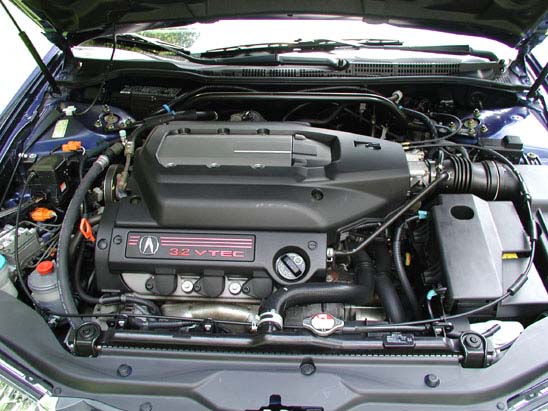
Tag: Vtec

  • Running on Fumes: Improper sizing of…Everything.

    One thing that I’ve noticed: a lot of people can’t size equipment right.
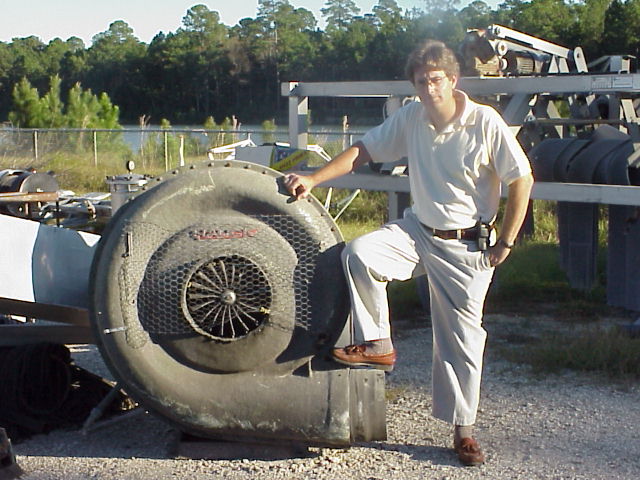
    National Speed - Gimongous Turbo

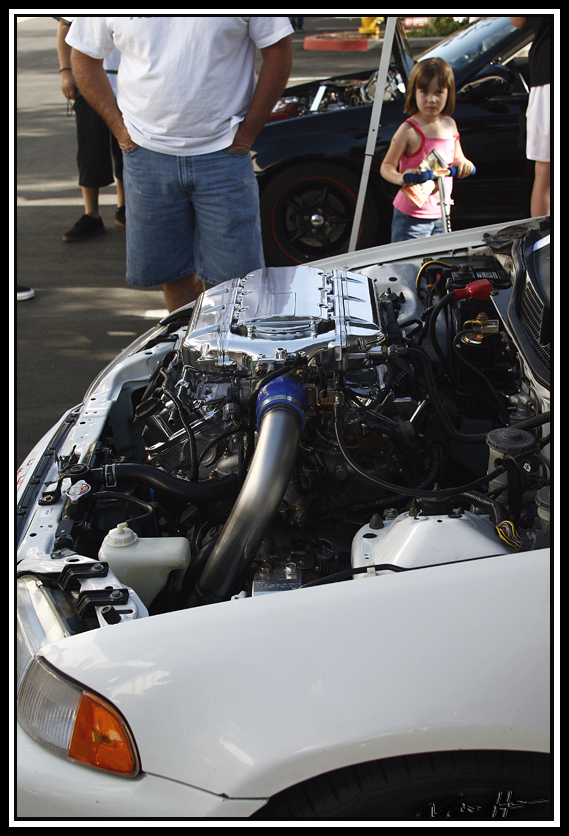
    What I mean by this is the guys that are throwing a 70 trim journal bearing turbo on a small displacement motor and wondering why they don’t spool until 1k before redline. They always ask why their powerband is so bad, or nonexistent. LAWL. This is what I mean folks. It’s all about sizing. In the case of turbos, bigger isn’t always better. If anything, if you’re running such a large turbo on a small displacement motor, when it finally DOES spool it’ll probably just blow your tires off anyhow. More often than not, you’d be way better off getting a smaller ball bearing turbo and actually having a powerband while still having some response.
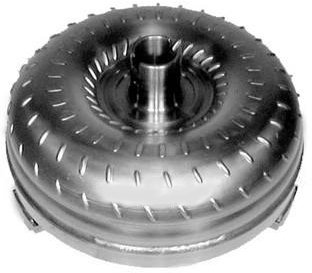
    National Speed - Aftermarket Stall

    Having an aftermarket stall on a automatic is great also, but just like everything else, it’s got to be properly sized. Let’s say you have a 4400rpm stall on your daily driven car. Does this make sense to you? I guess most people tend to forget that if you have such a large stall, your car will barely move in traffic unless you are applying a gratuitous amount of throttle. Finding a proper sized torque converter is key if you plan on driving on the street without sloppy and jerky acceleration.

    National Speed - Toda VTEC Killer Cams

    Let’s see. How about cams? I’ve seen guys with stock GSRs, stock valvetrain, with stock compression and Toda Vtec Killers. Hmm, why does my car produce 1ft/lb of torque at low RPM and stutter until I get to 6,000 RPM? Fail. There is no reason to get the largest lift/duration cams there ever was, because in that case, it just doesn’t work. Sure, you’ll have top end power for days but you’ll have to rev to 50,000k (exaggeration, obviously) to get the use out of them.

    Of course, this is just a few minor niggles than bother me, but I’m sure I’m not the only one. Before you buy anything. Please for the sake of yourself and anyone else around you. Please either do research, or talk to someone that knows what they are talking about.

    Thanks,

    Greg
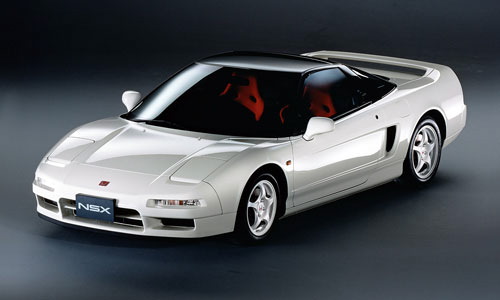
  • Acura NSX: The Everyday Supercar

    The NSX.

    First off, back to basics. We all know the Mid-engine NSX (“New Sportscar eXperimental”) was rare to begin with, and with a price of 85,000 greenbacks, it wasn’t exactly in everyone’s price range. The Acura NSX was set to be the everyday supercar.

    National Speed - NSX

    The NSX had a cutting edge ultra-rigid and ultra-light aluminum monocoque chassis, aluminum suspension, titanium rods, forged pistons, and not only that but it had rock solid reliability as well. Although the price was a little steep, most consumers didn’t realize what the NSX was capable of.

    With a suspension directly tuned by the legendary Ayrton Senna, and a high output Naturally aspirated V6, the NSX had a Ferrari rivaling performance for a much cheaper cost. While it already had scalpel-sharp handling and the instant power response you would find in an everyday supercar, Acura saw room for improvement.

    The NSX-R

    Along came a universal idea: take what’s already good and make it better. In 1992, Acura decided to roll out the NSX-R. While the NSX was intended to be a ultra high end sports car, engineers had to make some compromises to make it suitable for daily driving, taking away some performance edge.

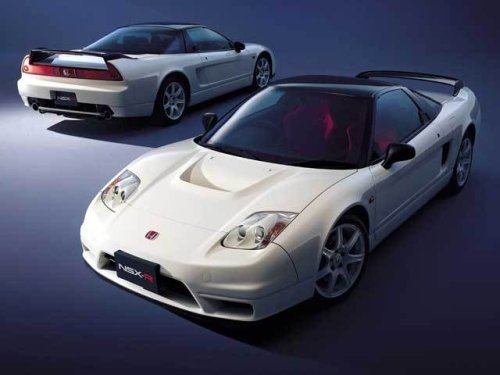
    The NSX-R cut out the slack. Starting out with a base NSX, the sound deadening, audio system and A/C were the first to go. The heavy leather seats were next, replaced by a carbon fiber Sparco racing seat. Next up were the stock rollers. Although not heavy to begin with, the stock wheels were replaced by aluminum Enkei wheels.

    National Speed - NSX-R

    All of this weight reduction shaved 264lbs off of the NSX, bringing weight to a scant 2700lbs, however, this NSX wasn’t just stripped. Honda replaced the original springs and dampers with new ones with stiffer rates to reduce a common mid-engine problem of snap oversteer.

    One of the last and most important things done was a final drive ratio change. With a higher final drive that meant the high revving V6 could stay in its powerband longer, at the expense of top speed. Production was limited to 482 examples, and was only produced for the Japanese market.

    The Spoon NSX-R GT

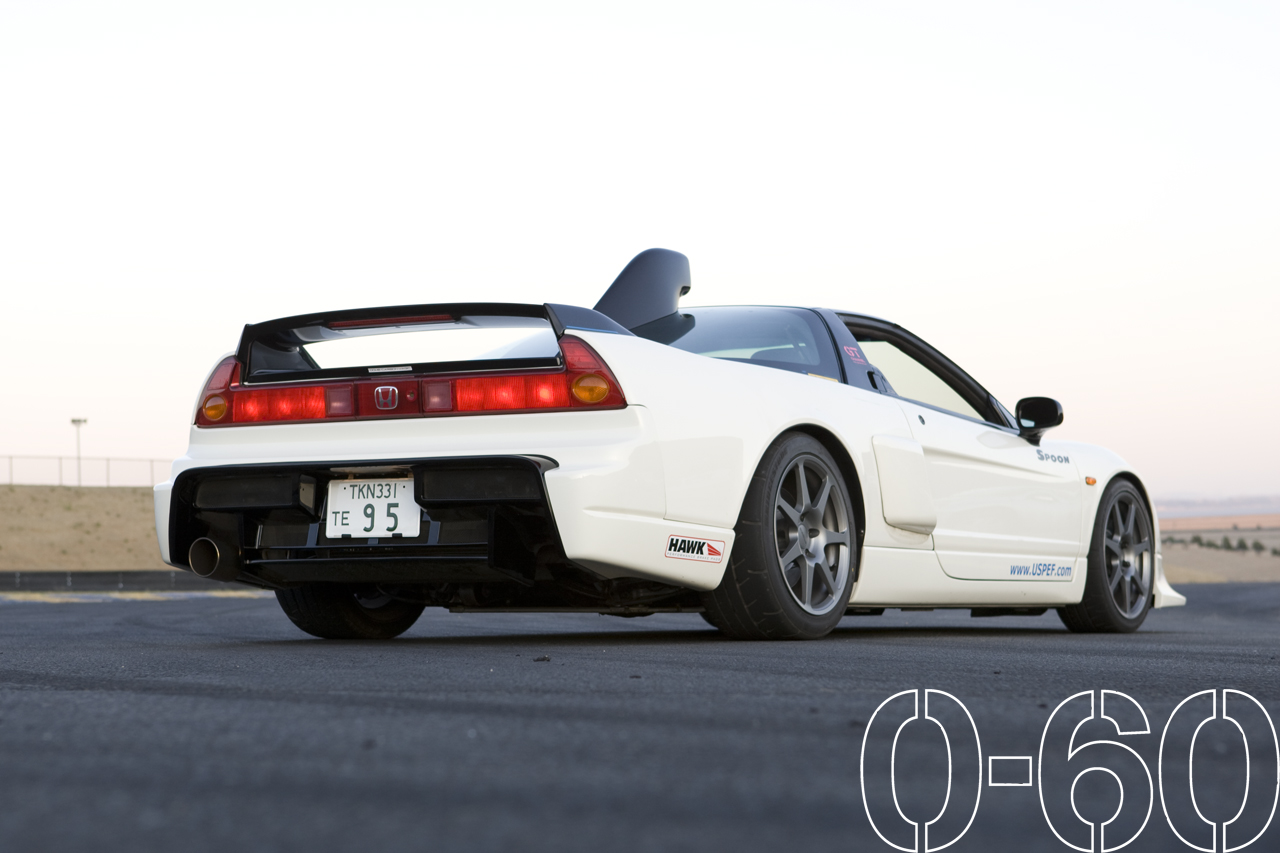
    The legendary Honda tuner Spoon decided to skip the already limited NSX, and take an even more limited NSX-R as its base. How do you make a car that has everyday supercar ability and TRULY make it special? Not too much is known about this car, as it is shrouded in secrecy, but one thing for sure is known. Forget that lowly 270hp, Spoon decided to take things to the next level and strap a large turbocharger to the motor to produce a rumored 420hp.

    National Speed - NSX-R GT

    [Photo Credit to: Robert Kerian]

    This NSX has been sighted at Twin Ring Motegi tearing up the track. The aggressive styling of the bodykit is sure to produce a huge amount of downforce. Spoon is rumored to be producing a copy of this car for consumers soon for a starting price of $150,000. Not a big price to pay for an everyday supercar, in my opinion.

  • The Next Big Thing: Honda J Series Motor Swap

    A 3.2 liter Honda? Honda motor swaps have been done every which way, and now thanks to Hasport, there’s a new direction to go.

    National Speed - Hasport V6 swap

    Hasport has just released their “j” series motor mounts for EGs and DCs (92-95 Civic/94-01 Integra/93-97 Del Sol). The J series motor is the same motor that powered most Acuras from 1998 and onwards. Hasport only recommends the J30A1, J32A1 and J32A2 as of right now. One thing to note, however, is the fact that you will need a 04-08 TL or 03-07 Accord 6-speed transmission. These powerplants are specifically as follows:

    National Speed - J30A1 Honda Motor

    J30A1 from the 98-02 Accord V6 or 97-99 Acura CL3.0

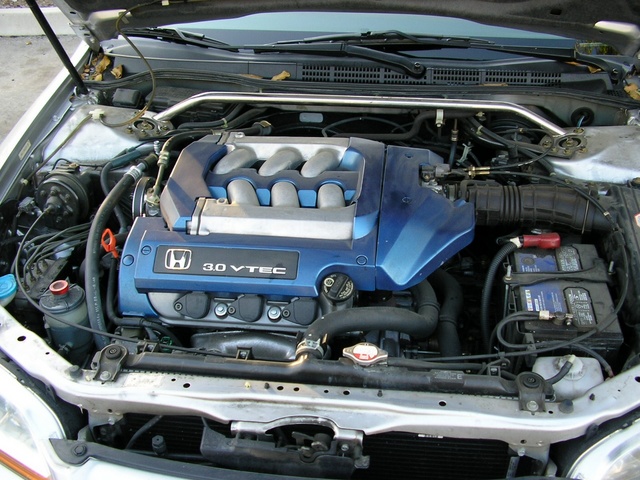
    The J30A1 displaces 3.0 liters and is a Single overhead cam with VTEC. The motor only weighs 250lbs and puts out 200hp and 195Ft/lbs. Due to a similar head design of the J32 motors used in the Acura CL and TL Type-S motors, these motors are a perfect candidate for a camshaft swap. Due to it being a lightweight V6, I’m sure if you threw this into a stripped EG hatch, it would fly.

    National Speed - J32A1 Acura Motor

    J32A1 from the 99-03 Acura TL and 01-03 Acura CL

    J32A2 from the 01-03 Acura CL Type S or 02-03 Acura TL Type S

    The J32 displaces 3.2 Liters and is also a Single cam slammer with VTEC. Horsepower figures were bumped up to 225hp for the J32A1, and the J32A2 bumped up figures even more to 260hp and 232ft/lbs. This was achievable by having a more aggressive cam, freer flowing intake and exhaust, and an innovative intake manifold.

    With the J-series motor mounts now being offered by Hasport, a whole new avenue of approach has been opened up for those looking to go in another direction than the everyday B16 and B18 swap. With the torque and horsepower being offered by these lightweight motors, I have a feeling you’ll see some nasty J series builds in the future. The popularity has not yet caught on strongly, so now’s the time to start looking for a motor.