Category: Gear and Tech

  • Make Your Minivan Sexy: Mugen Body Kit For Honda Odyssey

    A van with sex appeal? Yes, please.

    National Speed Mugen Odyssey closeup

    You know, I’ve always thought the best bet was to go hang out in front of Walmart in my moms minivan to pick up chicks. I guess there isn’t much appeal to a fat guy with an Afro chilling in a rusty 1982 dodge caravan. It appears Honda tuner Mugen has noticed my pleas for help and produced something especially for guys like me.

    Mugen has released the a shmexy body kit for the newly released 2009 Honda Odyssey. Some of you may think it sounds silly dressing up a minivan, but in my opinion it’s awesome.

    National Speed Mugen Odyssey three quarter

    National Speed Mugen Odyssey Rear

    Leaving the stock 203hp motor alone, Mugen focuses on the Odessey’s exterior. Modifications include a new grille, new front and rear fascia, sideskirts, baller 18″ wheels, slotted rotors, floor mats, sport exhaust and a new spoiler. Expect a price around $2,500. Not a bad price to pay for a badass grocery hauler.

  • What is Gymkhana?

    Gymkhana

    For those wondering, Gymkhana is basically a mixture of autocross and drifting, with other additional skillful maneuvers thrown in as well. Cones represent obstacles to navigate through. The “obstacles” involve many highly difficult driving maneuvers such as 360 spins, parking boxes, and figure eights…in other words my daily commute. For those of you talking trash about your epic driving skills in a parking lot, if you think you’ve got the guts, take it to a Gymkhana event and see how you stack up.

    Ken Block took the Gymkhana idea a little further and created an insane course at El Toro air station in Orange County using everything around as an obstacle, including an aircraft hanger and a house. Vehicle of choice? 530AWHP Crawford tuned STi. Yep…that’ll do it. Four sets of tires well used in my opinion.

  • The Next Big Thing: Honda J Series Motor Swap

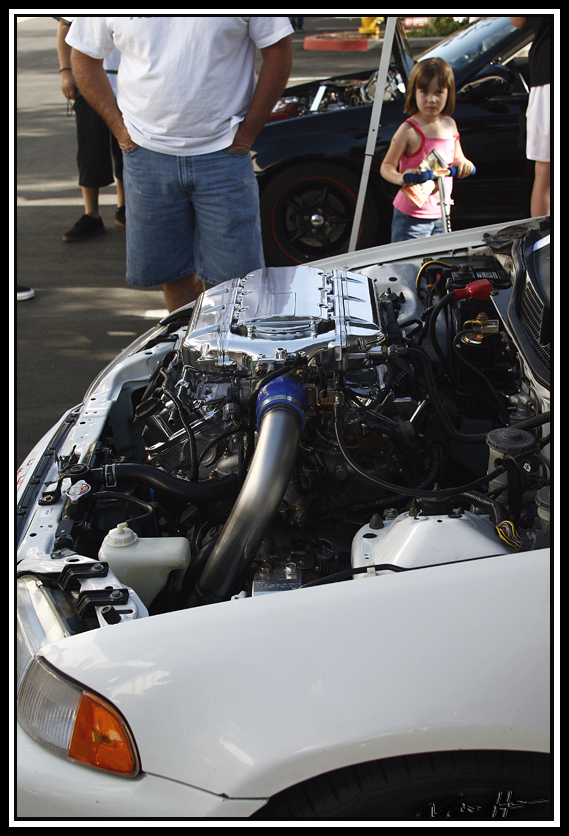
    A 3.2 liter Honda? Honda motor swaps have been done every which way, and now thanks to Hasport, there’s a new direction to go.

    National Speed - Hasport V6 swap

    Hasport has just released their “j” series motor mounts for EGs and DCs (92-95 Civic/94-01 Integra/93-97 Del Sol). The J series motor is the same motor that powered most Acuras from 1998 and onwards. Hasport only recommends the J30A1, J32A1 and J32A2 as of right now. One thing to note, however, is the fact that you will need a 04-08 TL or 03-07 Accord 6-speed transmission. These powerplants are specifically as follows:

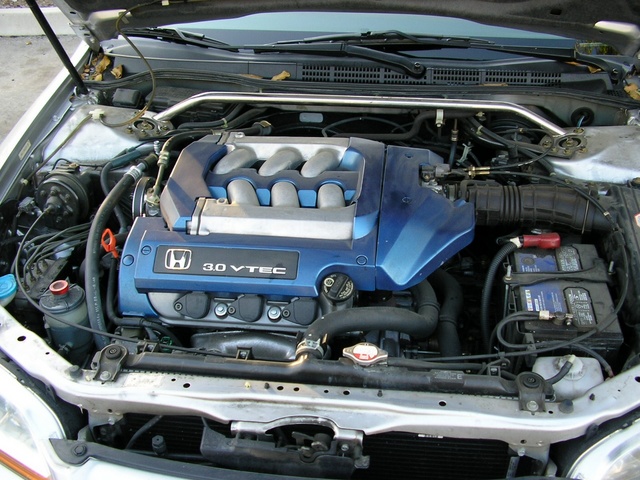
    National Speed - J30A1 Honda Motor

    J30A1 from the 98-02 Accord V6 or 97-99 Acura CL3.0

    The J30A1 displaces 3.0 liters and is a Single overhead cam with VTEC. The motor only weighs 250lbs and puts out 200hp and 195Ft/lbs. Due to a similar head design of the J32 motors used in the Acura CL and TL Type-S motors, these motors are a perfect candidate for a camshaft swap. Due to it being a lightweight V6, I’m sure if you threw this into a stripped EG hatch, it would fly.

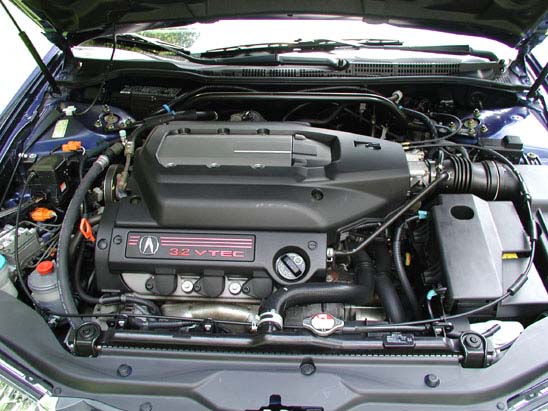
    National Speed - J32A1 Acura Motor

    J32A1 from the 99-03 Acura TL and 01-03 Acura CL

    J32A2 from the 01-03 Acura CL Type S or 02-03 Acura TL Type S

    The J32 displaces 3.2 Liters and is also a Single cam slammer with VTEC. Horsepower figures were bumped up to 225hp for the J32A1, and the J32A2 bumped up figures even more to 260hp and 232ft/lbs. This was achievable by having a more aggressive cam, freer flowing intake and exhaust, and an innovative intake manifold.

    With the J-series motor mounts now being offered by Hasport, a whole new avenue of approach has been opened up for those looking to go in another direction than the everyday B16 and B18 swap. With the torque and horsepower being offered by these lightweight motors, I have a feeling you’ll see some nasty J series builds in the future. The popularity has not yet caught on strongly, so now’s the time to start looking for a motor.

  • The 3,000 Mile Oil Change

    I have a confession to make. I went a year and a half without changing the oil in my car. There, I said it. I’m not proud of it, nor would I ever recommend trying it. In my defense I’d like to point out that I didn’t do this out of negligence or forgetfulness, I simply wanted to see what would happen (when you drive a Focus you can afford these stupid little social experiments). I’ve always heard that you should change your oil every 3,000 miles, but with today’s advances in synthetic oils and engine technology, does the 3,000 mile rule still apply?

    What if I Never Change My Oil?
    If you’re anything like me you like to push the limits. Someone tells you to stay off the grass, you throw a lawn party. No parking? Pardon me while my SUV takes up two spaces. It’s in my nature to do stupid things, hence not changing the oil in my car for close to 20,000 miles. In the case of my Focus I had to pay a sizable fee to get the equivalent of an automotive enema. I was lucky. But because I’m naturally inquisitive (i.e. stupid) I’ve always wondered what would’ve happened had I never changed the oil. This is what I found:

    1. Dirt and sediment will accumulate in the oil causing the filter to clog.
    2. The bad oil bypasses the filter through a relief valve.
    3. Detergent and other additives in the oil wear out.
    4. The oil stops lubricating and the engine wears out and seizes.

    A Change Would Do You Good
    So now that I’ve been scared straight into changing my oil routinely in order to avoid carmageddon, do I really have to change it every 3,000 miles? Simple answer: yes and no. In all honesty, if you drive a high performance vehicle you’re going to want to change your oil often. With the heat that is generated by high performance vehicles and the general wear and tear that comes with driving them, you definitely need to change it early and often.

    However, if you’re just tooling around town in a Tahoe, it’s not going to be as important. Today’s oil is much better than when the 3,000 mile rule first took hold. In fact, most cars today require the oil to be changed about every 5,000 to 8,000 miles (obviously it varies on a vehicle by vehicle basis and you should consult your manual for the proper maintenance schedule). Changing oil is not an exact science, but as long as you follow the manufacturer’s recommendations and not what some quick lube shack arbitrarily plasters on your windshield, you should be fine.

    *The author is not responsible for any damage your vehicle may incur due to the fact that his judgment is impaired by hardheaded stupidity.

  • Turbochargers vs Superchargers

    Coke vs Pepsi. Freddy vs Jason. Turbochargers vs Superchargers. The debate has raged since the dawn of time (slight exaggeration), and in the case of forced induction technology, shows no signs of stopping anytime soon. The ultimate irony is that both technologies are basically the same thing, they just derive their power in different ways. So which is better?

    The Basics
    Let’s start by examining the primary difference between a turbocharger and a supercharger. Cliff notes version: a turbocharger is powered by the exhaust gases of the engine whereas a supercharger is belt driven off the crank pulley. What this means is that a turbocharger uses wasted energy to make power. The drawback is that you may experience turbo lag, but that usually only happens with larger sized turbos. 


    Because a supercharger is belt driven, its power is based solely on the engine’s RPM’s. So the faster the motor turns, the quicker it turns the belt, which in turn produces more power. The good thing about this is that there’s no lag whatsoever. The bad thing is that because superchargers “take power to make power” there’s a potential for it to raise your gas bill. Generally, superchargers are preferred by drag racers because there’s no turbo lag. However, turbocharger technology is improving to get off the line faster.


    Head to Head
    One of the benefits of working in a high-performance auto shop is that you have some of the coolest toys to play with. In this case they happen to be two Nissan 350z’s — one outfitted with a Turbonetics 60-1 turbo and the other with a Vortech supercharger. We put them head to head on the dyno.


    The green lines represent the supercharged Nissan 350z, which as you can see from the chart, has a linear projection because the supercharger depends on engine RPM to get up to speed. It takes time for the supercharger to reach maximum boost. Conversely, when you look at the turbocharged 350z (represented by the red lines), there’s a clear indication that the turbocharger produces more peak power faster with near equal torque.

    The Bottom Line
    In this particular case, the turbocharger showed better results than the supercharger. However, there really is no clear cut answer as to which method of forced induction is better. They both have advantages and disadvantages, and when it all comes down to it, either one will give you a considerable boost over stock. The ultimate choice comes down to you and what best suits your driving style.


     

  • 535 whp on Turbonetics 60-1

    On August 9th National Speed’s tuner, Taylor King, squeezed 535 horsepower out of a Turbonetics 60-1 Ball Bearing turbo on our 2003 Nissan 350z. Check out the video to see the awesome footage.

    Click here for a full description of the 350z’s modifications.


  • How to Drive Your Car for Miles and Miles

    I once had a friend in college that drove an ’89 Civic with 250,000 miles on it and the sucker ran like a dream. No engine sputtering, no squeaky brakes, not a peep. Other than a busted lime green paint job and hemorrhoid-inducing seats, you’d swear the thing was mint. So when he told me that he’d never had any work done to it other than basic maintenance, I thought he was talking out of his ass rear exhaust. Not even Einsteen could figure out how to get 250,000 miles out of a twelve year old Civic.

    But sure enough my friend was telling the truth. Come to find out, if you take proper care of your car and alter some of your driving habits, you can drive until the wheels fall off. The trick is having a car that you actually want to drive for that long.

    1. Read the manual: Everything you’d ever need to know about taking care of your car is the in manual, and yet most people don’t even read the thing. Big mistake. The manual is the key to unlocking your car’s longevity, and contains valuable info about proper scheduled maintenance. If you’ve misplaced your manual click here for an online library thanks to the good folks at Edmunds.
    2. Change the oil: Probably the single most important thing you can do for increasing longevity. Without it your car’s a ticking time bomb, so defuse the situation by changing it as instructed. To find out how often you should change your vehicle’s oil, see tip number one.
    3. Watch the heavy foot: Accelerating fast and stopping quickly will put a lot of wear and tear on your engine. It’s also bad on fuel consumption, and with gas prices hovering at $4.00 a gallon, you may want to watch the peel-outs…no matter how much fun they are.
    4. Stick it in the garage: Keeping your car in a garage will help cut down damage caused by the elements, plus it’s much more effective than throwing a cover over it.
    5. Wash and wax: Nobody wants to drive an ugly car, especially if you’re going to be driving it for 200,000+ miles…so make sure you wash and wax frequently. And don’t forget about the interior! Vacuuming the carpet and scotch guarding the seats will make a difference.
    6. Get some fresh air: Most people know to change their oil frequently, but a lot of drivers forget about changing the air filter. This allows your engine to “breathe” easier and thus last longer, and it will also improve your fuel economy (click here for more tips on saving gas).
    7. Fill ‘er up: If you’re storing your car for an extended period of time remember to top off the tank. If you don’t you risk the chance of getting moisture in your fuel injectors.
    8. Cool Off: Maintaining the proper coolant level is almost as important as changing the oil. If you don’t have the proper coolant level the damage to your engine could be catastrophic overtime.

    The average life of most U.S. driver’s automobiles is 100,000 miles. If you follow routine maintenance and give your car some tender loving care, there’s no reason you can’t double that.

  • 5 Ways to Drive Further on a Tank of Gas

    It’s no secret that gas prices are gouging you at the pump. Every time I stop to fill up I half expect the attendant to blindside me with a shotgun and ask me to empty my pockets. At this rate we’ll be paying $8.00 a gallon and selling our souls for a gallon of diesel.

    Okay, maybe that’s a slight exaggeration, but if you’re anything like me you’re tired of paying out the nose for gas and ready to stop the bleeding. So I decided to do some research and talked with our technicians to find out how you can make your car more fuel efficient and save a buck at the pump.

    1. Keep your tires properly inflated
    This one seems pretty obvious but you’d be surprised how many people forget to keep their tires properly inflated. Not only will it give you better gas mileage but it’s safer and your car will handle better.

    2. Change your oil
    The more your oil gets heated and cooled down causes the viscosity to increase meaning the engine is having to work harder. Change your oil to alleviate unnecessary stress on your engine and your wallet.

    3. Tune your car
    Most cars are generically mapped. There are programmers out there that will remap your ECU to more efficient settings. A glorious byproduct of this is an increase in horsepower!

    4. Install an air intake system
    These systems allow for cooler air to be supplied to the engine as well as eliminates the accordian style plastic hoses with smooth metal piping. This makes it easier for the engine to breathe.

    5. Install a cat-back exhaust system
    These eliminate a lot of the unnecessary bends in your factory exhaust system allowing your engine to easily expel spent gas and exhaust pressure. Think about it like this: imagine you’re breathing through a tiny stirring straw and you switch to a McDonald’s milkshake straw. It’s going to be a whole lot easier to breathe, right?