Category: News

  • 18+ Mustang Ported Intake Manifold Dyno Test | SURPRISING Results!

    18+ Mustang Ported Intake Manifold Dyno Test | SURPRISING Results!


    Does intake manifold porting actually do anything on a 2018 or newer Mustang 5.0L engine? (Full Video below)


    Now we don’t mind admitting that ported manifolds have typically been considered one of those good modifications to do “while you’re in there”, and given that we’ve seen measurable gains on other platforms this isn’t something that exactly jumped out as being worthy of investigation with the 2018 and newer Mustang 5.0Ls.


    We’ve heard gains from individuals all over the place from 5hp to over 20hp from porting alone but realized that we hadn’t seen a real controlled test and since we got on a bit of a comparison kick with our test 2021 Mustang GT, we decided to run the test ourselves removing as many variables as possible.

    ford mustang stock intake manifold

    Before we get into that, let’s review some important details of our testing methodology. First, pretty much all late-model fords have a feature that’s called dynamic advance and with this, the ECU is constantly trying to add or subtract ignition timing to optimize performance for conditions as well as fuel. What that means is that without any change to hard parts or the calibration strategy, you can see some pretty significant swings from dyno run to dyno run. It goes without saying that that’s a pretty glaring variable for what needs to be a controlled test, so with that in mind, for every hard part that we change out we’ll be optimizing the calibration and then disabling dynamic advance for each dyno pull. This means that the only difference we’re showing in the graphs is from intake manifold porting alone and not from the ecu changing ignition timing on its own from run to run.


    Second, all these runs were completed in a two-hour window on the same dyno with the same calibrator with very similar conditions. It’s about as controlled as we can get without a laboratory setting.


    Alright with that all said let’s get started. First, our test car is equipped with our stage 2 naturally aspirated package. This includes a JLT Performance air intake system and Stainless Power long tube headers connected to the stock exhaust on 93 octane.


    Our baseline:  With the stock intake manifold came in at 459whp and 422lb/ft.


    From there the Mustang went back to the shop to have the ported intake manifold installed and back to the dyno.


    The results: After several runs to validate our findings, we saw absolutely no gains whatsoever. Now we’d like to note that this company makes no claims for gains on a stock Gen 3 engine so we can’t ding them here. That said we’re going to be looking for opportunities to perform this exact same test on more heavily modified forced induction gen 3 setups.


    In conclusion, if you have a bolt-on naturally aspirate Gen 3 Coyote engine, the odds that intake manifold porting will equate to real gains are low. If you have plans to do cams or turbochargers in the future, it may be worth the investment but, until we test side by side, we’d advise you to save the money.


    As always, if you have any questions at all we’re happy to chat thanks for watch

  • Camshaft Only | Worth It For Hellcat? DYNO TESTED!

    Camshaft Only | Worth It For Hellcat? DYNO TESTED!


    Today we’re showing you how camshaft only performs in a Hellcat. (Full Video Below)


    Now when you think first few modifications for a Hellcat, normally intake and pulley are at the top of the list. Given that this combination picks up over 100hp at the wheels it’s easy to understand why and since these cars are proven to make serious power on stock long blocks, camshaft upgrades are just less common than they are in other HEMIs. But let’s be honest, we all love that Chop Chop. So if you’re good with your stock performance, why not add a camshaft into the mix.


    That’s exactly what Brandi wanted from her 2021 Dodge Durango SRT Hellcat and made the trip in from Tennessee to make it happen. Her goal, to pick up that badass classic muscle car idol knowing that she would sacrifice a little performance down low and maybe pick up a little performance up top.


    Now, Brandy’s Hellcat is 100% stocked aside from a high quality intake, which not only adds considerable power but also sounds amazing.


    First, we strapped it down to perform baseline dyno pulls. Brandi’s Durango came back with an incredibly healthy starting point of 686.09whp and 627.99 pound-feet of torque.


    Durango Hellcat Baseline


    From there John installed our camshaft package. This package includes our custom billet core camshaft, PSI valve springs with Manley retainers, Comp Cams push rods, OEM Hellcat oil pump, and all the OEM gasket seals and hardware needed for a high quality installation. Now most Hemi engines come factory equipped with MDS, which is that four-cylinder mode most enthusiasts find pretty annoying.


    These components do not play nicely with an upgraded camshaft, so on all automatic 5.7L and 6.4L hemis from 2009 on, we have to pull the cylinder heads to install non-mds lifters and other components when installing a camshaft. But, since hellcats came from the factory without MDS, we simply front load the camshaft without having to remove the cylinder heads. This saves time and money for the customer without compromising on the result. That said if your Hellcat has higher mileage do yourself a favor and replace your lifters while you’re there.


    Camshaft Hellcat Durango


    With Brandy’s Hellcat back together, let’s see what the dyno has to say about this unique build.


    As expected, some losses down low with decent gains up top bringing our new Peak output to 700.19whp and 632.52 pound-feet of torque that’s peak gains a 14.10whp and 4.53 pound-feet of torque with maximum gains of 26.90 wheel horsepower and 27.67 pound-feet of torque. With that, maximum losses way down low in the Power band were 25.80 wheel horsepower and 52.30 pound-feet of torque.


    Durango Hellcat Cam Only dyno graph


    So in conclusion, as we expected, with an otherwise stock Hellcat there are much better options to add performance. However, if you pair a camshaft with our stage 2 package and that’s when gains really start to show up. However, for a stock vehicle the real gain is that undeniably badass idle and sadly we had some technical difficulties with our idle video but thankfully Brandy hooked us up with a quick cell phone clip, so just ignore the video quality here and listen to this Hellcat on the ground.


    As always if you have any questions at all we’re happy to chat.


  • Are Drag Radials Killing Your Dyno Numbers?

    Are Drag Radials Killing Your Dyno Numbers?


    But they’re just tires, how much of an impact could they really have on dyno numbers? In this video, we answer that question by showing how not only tires, but also tire pressure play a MUCH larger role than most realize.

    Spoiler Alert!


    Both pressure and size/stlye make a big difference. If you’re planning on hitting the dyno and want the most consistent numbers possible use a street tire for the dyno session or, if you have to use radials, adjust the pressure on your drag radials accordingly. With that, we can’t emphasize this enough. never exceed the tire’s recommended pressure. A tire blowing out on the dyno will ruin everyone’s day.


  • DYNO SHOOTOUT: C8 Corvette ProCharger VS Twin Turbos Compared Head-to-Head!

    DYNO SHOOTOUT: C8 Corvette ProCharger VS Twin Turbos Compared Head-to-Head!


    What’s better, Twin Turbo Systems or Superchargers for my C8 Corvette? We get this question all the time from customers and see people asking all over the internet. So which one is better? We decided to put two of our favorite forced inductions solutions, specifically the ProCharger Stage 2 system and the Peitz Performance Bravo Light twin-turbocharger system, to the test and give you the data to decide which system is best for your C8 Chevrolet Corvette. To decide which product is best, most costumers look into cost, performance, and reliability.

    C8 Corvette National Speed


    COST

    It is worth noting that these systems are a fair bit more expensive than your average forced induction solution. If you have had a C6 or C7 in the past and looked into superchargers, you may be surprised to see the cost of these systems in comparison. Why?


    • It’s All New: This is a completely new platform. That means manufacturers are unable to pull parts from earlier kits to cut down on cost.
    • R&D: Manufacturers have spent countless hours designing and testing these systems. Unlike most models where you can add a couple of HP Tuners credits and get to tuning, most systems require additional hardware or a tremendous amount of R&D to unlock and tune the factory ECU and Transmission.
    • Limited Production: Given the low production volume, most manufacturers are not able to buy these items in the quantities they would traditionally purchase. In fact, many of these systems are made to order.
    • Cost of Goods: As much as we all hate to hear it. Many of the materials needed are substantially more than they used to be.
       

    ProCharger Stage 2 – Parts: $20,184 (upgrades available) | Parts, Installation, & Tuning: Starting at $22,799

    Peitz Performance Bravo Light System – Parts: $25,120 | Parts, Installation, & Tuning: Starting at $28,999

    ProCharger System C8

    Performance

    National Speed has installed a number of ProCharger Stage 2 systems on customers’ C8 Corvettes, which add over 170 horsepower and 150 pound-feet of torque to the rear wheels in standard form and options to cross 800hp by adding water/methanol injection.


    This system is a bolt-on solution that retains all factory emissions equipment and doesn’t alter the factory driving characteristics until you hit the gas pedal. Even more impressive, the ProCharger C8 supercharger system uses a natively calibrated ECU, which makes the system simpler and less concerning for transmission longevity.

    C8 Corvette Peitz Twin Turbo Kit Installed

    On the other hand, Peitz Performance’s C8 Corvette twin-turbocharger system is also designed as a daily drivable solution that retains all factory emissions equipment, including the catalytic converter. The system features twin Precision 6266 ball-bearing turbochargers, and what sets it apart is their Delta control module, which pairs with the clutch pressure controller.


    This combination is like a piggyback tuner on steroids, modifying incoming sensor signals to the ECU to get it to play nicely with the aftermarket equipment without upsetting the sensitive factory electronics.

    For those looking for more, the system can support over 1,100hp and the Delta control module has additional inputs and outputs to control nitrous, water-methanol injection, fuel pump activation, and even Flex Fuel.

    The system’s comprehensive design and quality construction are among the factors that make it stand out.


    The video below breaks down the installation of each system, and once both systems are installed, the C8s are put on the dyno for testing.


    The result? The ProCharger system generated 628.15 wheel horsepower at 6200 RPM and 551.95 pound-feet of torque at 5400 RPM at 7.5 PSI and the Peitz Performance Bravo Light twin-turbocharger system generated 625.01 wheel horsepower at 6500 RPM and 606.19 pound-feet of torque at 4300 RPM at 6 PSI.


    * These numbers are measured on a chassis dyno. Traditional Engine HP numbers that you see vehicle manufacturers advertise would be much higher but less accurate when doing side-by-side comparisons.


    While the two systems have comparable peak horsepower, the Peitz Performance system pulls ahead in the midrange torque by 54 pound-feet and peaks at 1100 RPM earlier than the ProCharger. It is worth noting that the Peitz Twin Turbo system generated those numbers with 1.5psi less boost pressure. Below you can see the graph overlay (red lines are Procharger and the blue lines are Pietz Performance). 


    Reliability

    In conclusion, both systems are excellent options for a daily drivable solution for the enthusiast that doesn’t want to alter any factory emissions equipment or lose any factory driving charecteristics. The ProCharger system is a g


    , but the Peitz Performance system has more torque, and the Delta control module provides additional features that could be useful in the future. Ultimately, it comes down to personal preference and what features and performance gains are essential to each driver.


    For a more in-depth look at the installation process, you can find an over the shoulder look a both kits 


    If you have any questions, or need additional information we are always happy to chat. Give us a call or fill out our contact form and we will reach out within 24 hours.

  • Hellcat: Ported Snout VS Full Ported Supercharger On Pump Gas DYNO TESTED!

    Hellcat: Ported Snout VS Full Ported Supercharger On Pump Gas DYNO TESTED!


    Today we’ve got something really cool for you (full video below). Nearly every day we get the same question about our stage 2 package for Hellcat models, what’s better for pump gas only a ported snout with a stock untouched supercharger or a full port? This question is more loaded than it might seem at first sniff, as we’ve covered in other videos reducing inlet restriction on positive displacement superchargers almost always results in a considerable power increase. The theory is that by allowing the supercharger to draw air with less restriction this translates to an increase in power due to improved efficiency, but as we’ll cover in this video that line does have a major caveat.


    In short less restriction doesn’t always translate to more airflow and in these cases it means you’re spending money to lose power which obviously defeats the purpose. Now it’s well accepted that full port on a Hellcat supercharger is reserved for Max effort setups, the thought is that gains only show up at higher boost levels, so this doesn’t really apply to pump gas but is that really the case?

    Hellcat Challenget

    That’s what we’re answering today. Our subject is Kevin’s 2019 Dodge Challenger SRT Hellcat which operates on 93 octane. Up first we’re starting with the following combination that Metco Motorsports 2.85 upper supercharger pulley, Kong Performance ported supercharger snout, Kong Performance 108mm throttle body, and Corsa intake system.


    Normally we use a JLT Performance air intake system but in this case Kevin wanted to reuse his existing Corsa intake system until he goes stage three. It won’t perform nearly as well as our preferred JLT but it’ll work fine for comparison purposes.


    Now let’s get our baseline dyno pulls in current conditions.

    Hellcat Ported Snout Baseline.jpg

    Our baselines come in at 726.80whp and 647.10 pound feet of torque now that’s obviously significantly lower than we normally see with this package in fact that’s 80 wheel horsepower less than this car did just a couple months ago over the exact same combination so what changed?

    Hellcat Challenger Radials.

    It’s all drag radials and as we’ve covered in another video (here) this has an enormous impact on your dyno readings, but even though the power is reporting lower this is still perfectly useful for comparison purposes.


    Have a look at the difference between the stock and ported bearing plate.

    Stock vs ported hellcat supercharger

    See how much more of the supercharger rotors you can see on the ported version? That equates to additional airflow. Up next Alex installs our test supercharger that’s received a ported bearing plate from Kong Performance.

    Supercharger install Hellcat

    Now with no other change in setup let’s see the results and unpack the data here.


    The first thing that jumps out considerable loss up until about 5,000 RPM and then the gains ramp in. New peak output is 751.67whp and 650.87 pound-feet of torque as Peak gains of 24.87 wheel horsepower and 3.77 pound-feet of torque over just the ported snout and throttle body and not to mention maximum losses of 41.65 wheel horsepower and 49.67 pound-feet of torque at 2600 RPM.

    Ported vs stock blower dyno graph gains

    One thing to note is that no tuning revisions were made during this comparison so we would be able to offset some of these losses down low with a little bit more ignition timing, but we wanted to show the difference in airflow alone. So what’s going on here? Well, the answer is not just boost pressure but how the delivery of that boost pressure has been altered.


    So, let’s compare boost pressure and engine RPM as we step through this data. Remember that Hellcats produce 11.6 PSI in factory form. At 3,000 RPM, the ported snout produces 14.21 PSI, while the full port produced 12.43 PSI. Nearly 2 PSI less for the full port. At 4,500 RPM the ported snout produced 14.79 PSI, while the full port produced 13.92 PSI. Nearly 1 PSI less for the full port. And at 6,000 RPM the ported snout produced 15.81 PSI while the full port produced 15.95 PSI.


    Now remember when we said that less restriction doesn’t always translate to more airflow well that’s what’s going on down low here. With a pump gas-safe pulley ratio, the supercharger simply isn’t moving enough air to take advantage of the full port until the engine starts winding up and then the gains start ramping in. But with stock Redline shift points, you’re only recognizing those gains for a split second before you shift to the next gear.

    Ported vs stock blower dyno graph boost pressure

    Ported vs stock blower dyno graph boost pressure 4500 rpm

    Ported vs stock blower dyno graph boost pressure 6000 rpm

    However, check out what happens when you increase engine speed to 6,500 RPM. That’s starting to show up. Power output jumps big time to 771.31 wheel horsepower for the full port and 740.59 wheel horsepower for the ported snout and throttle body alone. At this RPM that’s a significant difference of 36.72 wheel horsepower just by spinning the engine a bit faster and allowing that airflow.


    So if you’re on pump gas, a ported snout and throttle body alone is the clear winner and for daily drivers this is a good way to go. However, those more interested in drag racing, half mile events, or trips to Mexico with a higher red line and shift points, the gains start to make a lot of sense. And frankly, knocking a little bit of power out down low can result in a more usable power band, unless you’ve got all the traction modifications.

    Hellcat Challenger

    In conclusion, for a pump gas Hellcat if you want the broadest power band possible stick with the ported sound throttle body, and if you’re looking for optimal straight-line performance the full port is definitely worth considering but only if you increase your red line and your shift points take advantage of the power.


    As always, if you have any questions at all we’re happy to chat.

  • Game-Changing Stainless Power Headers For 2016+ Camaro SS & ZL1!

    Game-Changing Stainless Power Headers For 2016+ Camaro SS & ZL1!

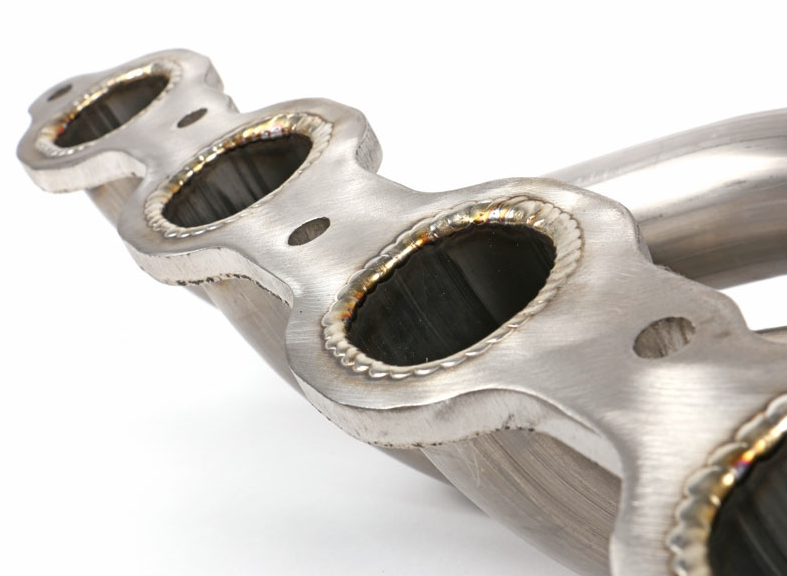
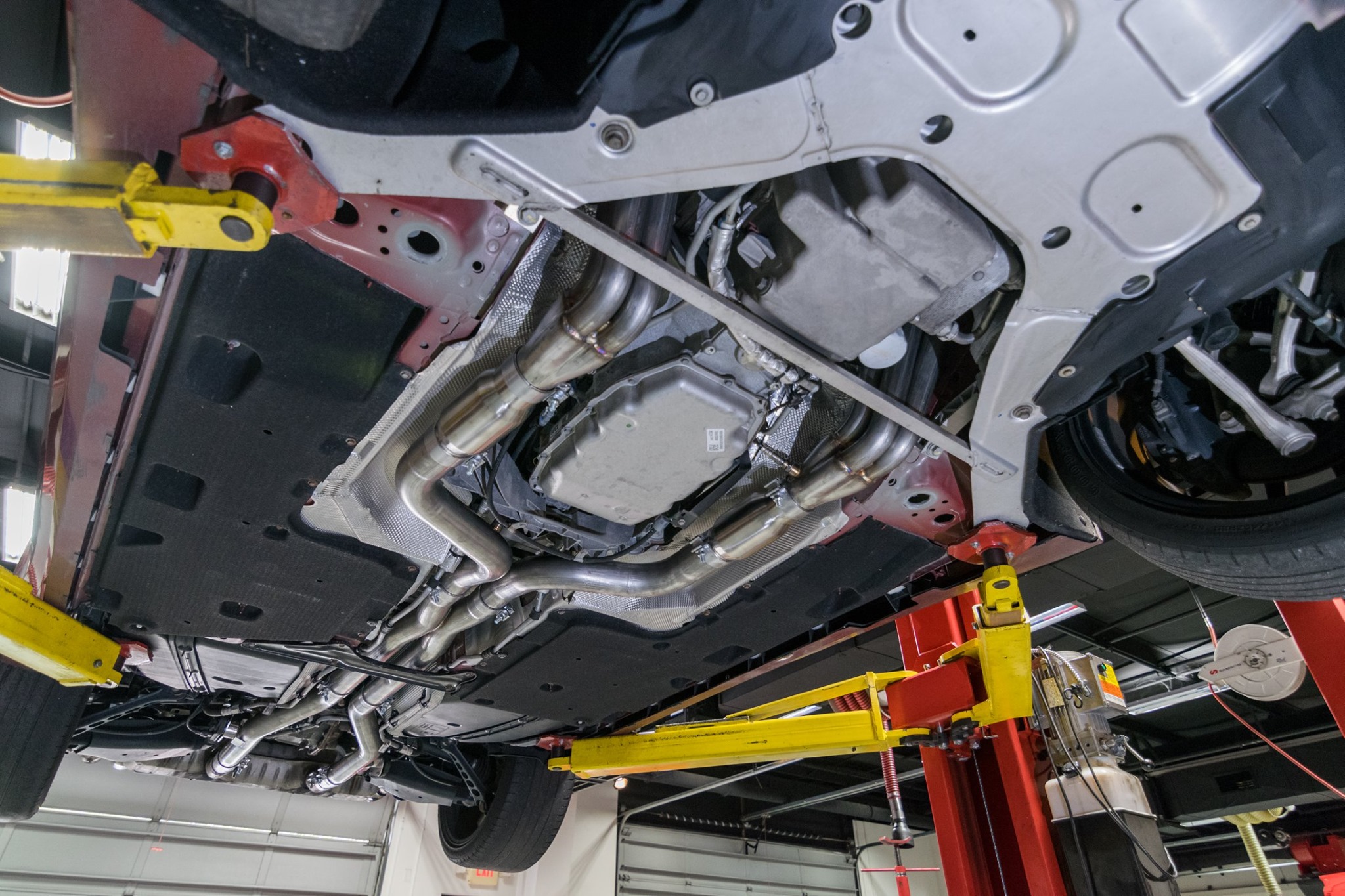
    Stainless Power headers for 2016+ Camaro SS & ZL1:  Cheaper doesn’t always mean cheaper…

    The familiar adage of “you get what you pay for” rings true in many cases, but with the release of the all-new Stainless Power headers for the 2016+ Camaro by Stainless Works, a cheaper price no longer means cheaper quality!  Long gone are the days of having to pay $4,000+ for just a header system install and performance tuning – and we are very happy about it!


    Those of you who have been around the aftermarket automotive performance world will likely recognize the Stainless Works name as they have been a leading manufacturer of high-quality aftermarket header and exhaust systems for many years.  With the new Stainless Power line of header systems you can now enjoy the same great fitment and performance that has been traditionally found in Stainless Works systems at a reduced price!


    In this article we will dive deeper into why your 2016+ Chevrolet Camaro SS & ZL1 needs long-tube headers in the first place, and why the Stainless Power headers should be your first choice.  If you’ve already made your decision and are ready to purchase your set of Stainless Power headers today, then read no further and call our team of performance consultants to lock in your install date and get ready to enjoy the newfound power and sound from your Camaro!


    What can Headers do for You?

    If you haven’t had the chance to modify your 2016+ Camaro yet you may be wondering what the benefits are from installing long-tube headers.  The primary benefit to most engine modifications is of course an increase in horsepower.  Although modern performance vehicles come equipped with a fairly high-flowing exhaust system there is still performance left on the table, and that’s where long-tube header systems come in.  With a design that incorporates large diameter primaries and high-flow catalytic converters, more air can escape the engine at a much faster rate.  This increase in air flow out of the engine will typically result in a gain of 20-25hp* with proper tuning.


    The other main benefit of installing long-tube headers is the amazing sound that they generate.  By replacing your vehicle’s factory exhaust manifolds and catalytic converters with the Stainless Power header system you will generate a slightly louder but much more aggressive tone from your exhaust, even with the factory mufflers still in place.  This increase in sound is guaranteed to enhance your driving experience and provide you with a symphony from your exhaust that you are sure to love – even if your neighbors don’t.


    The Stainless Power Advantage

    Now that we’ve explored the benefits of installing long-tube headers on your Camaro it is time to understand why the Stainless Power systems offer the best value per dollar when compared to other brands.  To start, Stainless Power is produced by the team at Stainless Works who have solidified their place in the market as one of the top-quality manufacturers of aftermarket header and exhaust systems.  Stainless Works systems are manufactured from high-quality 304 stainless steel material, offered in 1-7/8” and 2” primary diameters, provided with high-flow catalytic converters and full 3” exhaust piping up to the factory muffler, and come standard with a limited lifetime warranty.


    When comparing the Stainless Works header systems to the all-new Stainless Power offerings we will quickly find that these two products are more similar than they are different.  Stainless Power header systems for the 2016+ Camaro are similarly constructed from 304 stainless steel material, provided with the same high-flow catalytic converters for emissions compliance, and produce nearly identical performance gains and sound once installed.


    The differentiating factors that help in providing these benefits at a reduced cost are that the Stainless Power systems are constructed overseas, only offered in a 1-7/8” primary diameter and come with short connection pipes that connect the aftermarket system to the vehicle’s stock exhaust just after the catalytic converters.  After installing several of these systems through our staged performance package offerings we have been able to set our customers up with a system that provides amazing results while also saving them money that they can use towards other modifications. 


    With all of these amazing benefits at a competitive price point it is easy to see why the Stainless Power brand is our number one choice in long-tube headers for late model Camaros, Mustangs, Challengers, and more.  Give us a call today and let our team of performance consultants show you how Stainless Power headers can take the performance of your Camaro to the next level!


    *Actual performance results will vary based on the final configuration of the vehicle.


    Contact Us to Discuss Your Next Project

  • What Is Flex Fuel? What It Is And How It Works Explained Simply!

    What Is Flex Fuel? What It Is And How It Works Explained Simply!

    E85 Flex Fuel

    Counter to how it may sound, Flex Fuel is unfortunately not the newest fitness supplement to hit the market.  However, it is a key technology that can aid you and many others in utilizing E85 fuel in your vehicle.  If you’ve recently read our latest E85 fuel overview article then you may be left wondering how exactly you can set your vehicle up to take advantage of all of the great benefits that E85 has to offer.  With Flex Fuel technology this is easier than ever before to take advantage of all the benefits that ethanol-based fuels have to offer.  Join us as we peel back the cob on what Flex Fuel is and how it can help in adding performance to your ride!


    What is Flex Fuel?

    Traditionally, if you were looking to operate your vehicle on a fuel other than what it was designed for, such as E85 or racing fuel, you would have to not only install the correct components to support that fuel, but also would have to change your vehicle’s tune to one that is calibrated specifically for that fuel type.  While this may sound simple enough, this process of ensuring that you have fully drained your existing fuel, filled with the new fuel, and then successfully changed your tune can become cumbersome and annoying over time.  With Flex Fuel technology you can now switch from standard gasoline to E85 fuel, or any mix of the two, on the fly without the need for monitoring your ethanol content or having to store and flash multiple tunes.


    The way that Flex Fuel can provide this level of simplicity is by using a sensor installed on the vehicle to transmit information back to the engine control unit (ECU) telling it what the ethanol content of the fuel is at that given time.  Once the ECU has determined the ethanol content, it can then make changes to the vehicle’s calibration in real time to compensate for that fuel type.  To actual sensor(s) used to determine ethanol content in a vehicle will vary based on the vehicle type, but there are two primary strategies for gathering this information.


    Flex Fuel Sensors

    The first strategy is to use a Flex Fuel sensor that is installed in-line with the vehicle’s fuel system.  The sensor has an inlet and outlet in which fuel from the tank can flow through, and the sensor can detect the ethanol content of that fuel as it passes through.  The sensor then has a direct line of communication to the ECU which can then interpret that signal into ethanol content. 


    Because the fuel is flowing directly through the sensor this is by far the most accurate and effective method of interpreting ethanol content.  This is the standard method used in many GM vehicles as well as used in many aftermarket Flex Fuel kits.  Unfortunately, not every vehicle or ECU can support this type of system, so an alternative method called inferred Flex Fuel is required.


    Check out of this method of Flex Fuel conversion, as used on A90 Supra, in the video below!


    Inferred Flex Fuel

    For vehicles that are unable to support an external Flex Fuel sensor, the option for inferred Flex Fuel may be available.  The strategy of inferred Flex Fuel relies on oxygen sensors placed in the vehicle’s exhaust system to return information back to the ECU that can then be interpreted into an ethanol content.  While this may sound confusing at first, the method is actually quite simple.  As exhaust gasses pas by the oxygen sensor(s), they will send back a voltage signal to the ECU.  The voltage signal that is sent back will vary based on the air/fuel mixture in the engine at that time.  Because E85 and gasoline have very different stoichiometric values (ideal ratio of air and fuel to support combustion), the voltage readings will be very different when each fuel is applied.  The ECU can then use this information to determine what fuel is in the vehicle at that time and adjust the calibration accordingly.


    While this method may sound better due to its lack of additional parts, the fact is that it is not the most accurate way of determining ethanol content and should be implemented with caution.  Inferred Flex Fuel is a reactionary strategy meaning that it takes some time for the engine to run before the sensors will pick up the change in signal and have time to make the necessary calibration changes.  Also, other mechanical variables that cause changes in air/fuel mixture, including something as simple as an exhaust leak, can cause improper oxygen sensor readings that can lead to an improper change in the vehicle’s tune.


    Check out our Inferred Flex Fuel calibration for Ford Mustang in the video below!


    Flex Fuel Conclusion

    With the growing popularity of E85 and the huge performance benefits that result from using it, it is easy to see why Flex Fuel technology is extremely beneficial in vehicles that want to utilize this fuel type.  Not only is the process of switching between pump gasoline and E85 made easier than ever, but there is also a large safety benefit available.  Traditionally E85 tunes will run much more aggressive parameters that can be dangerous when lower octane fuel is in place.  In instances where a bad batch of E85 with an unexpectedly low ethanol content may enter your fuel tank, a flex fuel sensor can be an engine-saver by softening the tune based on the actual content realized by the sensor.  For this reason, we believe that Flex Fuel technology is a critical piece for any vehicle using ethanol-based fuels. 


    If you enjoyed this article and would like to learn more about the specific Flex Fuel system applicable to your vehicle, or if you would like to schedule an appointment for a Flex Fuel install and tuning session, then give our team of performance consultants a call today!


    Reach Out Today!

  • What Is E85? Benefits and Drawbacks of E85 Explained!

    What Is E85? Benefits and Drawbacks of E85 Explained!

    E85 – Race fuel performance at gasoline prices!

    Have you noticed the new pump handles at your local fuel station that say “E85” and wondered what they are all about?  What if we told you that this is the key to unlocking more horsepower from your engine while also helping it run more efficiently, and all for less than what you’re paying for premium gasoline?  E85 fuel provides these benefits and more which is why we call it the automotive “nectar of the Gods”, but there are a few things to consider before pulling the trigger on the yellow pump handle.  In this article we will take you through the good, the bad, and the beautiful of running this fuel in your vehicle, but if you simply want to see how you can add more power to your ride with E85 then our team is standing by on the phones to answer your questions today!


    What is E85?

    E85 is a fuel that consists of a mixture of ethanol and gasoline.  Ethanol is alcohol that is derived from plant matter such as corn or sugar cane, and when used as a fuel for automotive engines it can provide properties that allow for increased performance.  However, most vehicles cannot operate on ethanol alone as this fuel is very corrosive to fuel system components in its isolated form, as well as it requires much more energy to ignite making it difficult for engines to start on ethanol in cold temperatures.  To overcome these two issues traditional gasoline is blended with the ethanol.  This provides additional detergents to the fuel to protect against corrosion, as well as lowers the energy required to ignite the fuel so that vehicles can easily start in cold climates.  


    Benefits of E85

    To fully understand the benefits of E85 fuel you must first be aware of the actual ethanol content in the fuel you are filling with.  In the United States E85 fuel can range from an ethanol content of 50% to 85% with the remaining content of the fuel being traditional gasoline.   The actual mixture that you will receive from the pump will vary based on the region that the fuel is being sold in as well as the time of year as the ethanol content is reduced to help with those cold-start conditions that we mentioned earlier.  The main point here is that the performance benefits from E85 fuel will increase as the content of ethanol increases in your fuel.


    Now that we understand ethanol content in E85 fuel we can look at what key factors actually allow engines using E85 to outperform those using traditional gasoline:


      1. Octane Rating – The first factor to consider is that E85 carries a higher-octane rating than standard gasoline. Depending on the final ethanol content of the E85 being used the octane rating can range from 100-105.  This is a significant increase from most premium gasoline in the United States which only carries a 91-93 octane rating.  By providing a higher-octane content the engine can safely run higher boost pressure and/or ignition timing with a lower risk of detonation.  Prior to E85 being readily available this level of octane was only found in very expensive and hard-to-source racing fuels, but now E85 provides this same level of performance and protection at your local pump and for a cost that is generally lower than premium gasoline.  
      2. Cooling Effect – E85 also provides a significant cooling effect that is not found in gasoline. This cooling effect will provide lower temperatures in the combustion chamber during the ignition process which allows for a safer environment in high-performance engines that run high boost pressures or ignition timing.  Also depending on the fuel system in your vehicle, some engines may experience a reduction in intake air temperatures that can lead to an increase in horsepower as well.  


    Due to many variables in combinations it is impossible to put a general number on how much horsepower and torque will increase on E85 versus gasoline.  However, it is safe to say that any vehicle will show a performance increase by using E85 as long as E85-compatible components are installed and the vehicle’s ECU has been properly calibrated for E85 fuels.  These benefits coupled with the low cost of E85 make for a compelling argument to change your vehicle over to E85.


    We ran tests between E85 and other fuels on our A90 Supra test vehicle to see how it stacked up. To see the results, watch the video below. 

    Drawbacks of E85
    While the additional performance at a low cost with E85 is significant, there are a few additional factors to consider before deciding that E85 should be the preferred fuel for your vehicle.


      1. Vehicle/Component Compatibility – The first item to consider when deciding to switch to E85 fuel is whether your vehicle is equipped to safely use E85. When comparing a vehicle on gasoline versus one on E85 with identical combinations, the E85 vehicle will demand 30-35% more from the vehicle’s fuel system than the gasoline vehicle.  Because of this, most vehicles will require some form of fuel injector and fuel pump(s) upgrade before it can support E85.  Also, many manufacturers did not provide ethanol-compatible fuel lines and components until the mid-2000’s, so it is best to discuss exactly what is needed to run E85 in your specific vehicle with your performance consultant prior to making the switch.
      2. Fuel Economy – E85 vaporizes at a rate of 30-35% on average faster than traditional gasoline. Because of this, vehicles that operate on E85 fuel will typically see a reduction in fuel economy by that same 30-35% rate compared to what the vehicle would experience on gasoline.  However, E85 is generally less expensive per gallon than premium gasoline so for most users this is not a significant concern.
      3. Availability – While the availability of E85 fuel has drastically increased in the past several decades there are still many areas that do not have reasonable access to E85 at a traditional fuel station. Due to being produced primarily from corn matter, E85 is prevalent across the mid-west as well as larger cities where fuel transportation is frequent.  However, regions that are more scarcely populated and located further from corn-producing areas may have more difficulty sourcing the fuel. 
    1.  


    Is E85 Right for You?

    Now that we have explored some of the benefits and drawbacks of E85, it is time to decide whether E85 is the right fuel for your specific vehicle application.  After you’ve spoken with your performance consultant on what components will be needed to equip your car to be compatible with E85, the next step is determining the availability of E85 in your area as well as if you are comfortable with the reduction in fuel economy when using E85.


    There are many resources to determine the availability of E85 and other ethanol-based fuels in your area.  Most notably is www.gasbuddy.com which provides you with an easy to use search engine that locates all of the available fuels in your area based on your location.  When conducting your search, you may find that E85 is not readily available in your area, however that should not put a stop to your consideration of E85 as many aftermarket fuel manufacturers such as VP Racing Fuels are now offering their own versions of ethanol-based fuels that can be ordered online and shipped directly to your house or local performance center.  If your vehicle is more of a weekend warrior this may prove to be a great solution to increase performance without worrying about where to fill up.


    The reduction in fuel economy is also easily justified by the traditionally lower price per gallon of E85 when compared to premium gasoline.  While the reduction in fuel economy is real, the benefits of a higher performing and safer engine far outweigh the extra trips to the pump.


    As you can see from this article there are many advantages to using E85 fuel in your vehicle and our team of performance specialists are happy to help in answering any additional questions that you may have about making the switch.  Every vehicle application and combination differs slightly, and National Speed is equipped with the tools and resources to help in guiding you on a path to increasing the performance in your vehicle without compromising safety or reliability.


    Contact Us to Discuss Your Next Project

  • 2020 VS 2021 A90 Supra: Which Makes More Power TUNED?

    2020 VS 2021 A90 Supra: Which Makes More Power TUNED?

    2020 GR Supra owners weren’t thrilled when Toyota gave the 2021 model a 47hp bump in the form of an improved engine just a year after launch. And while the 2021 outperforms the 2020 in showroom stock trim, what happens when each get the same upgrades and calibration? In that case, the choice is not so clear. SPOILER: one of them gained 145hp on 93 octane…

    In this video, we put upgraded 2020 and 2021 GR Supras head-to-head! Both are equipped with our Stage-3 package, both calibrated by Vlad via EcuTek, both tested on the same dyno, and both completed just days apart with similar conditions. It’s the ultimate 2-port versus 6-port engine comparison!

    Stage-3 package contents for both 2020 and tunable 2021 models below:

    • MST Performance Auto Parts air-intake system
    • Optional MST Performance Auto Parts turbocharger inlet
    • Extreme Turbo Systems down-pipe with EPA compliant GESi high-flow catalytic converter
    • Optional AMS Performance 3.00″ charge pipe
    • Calibration via EcuTek Technologies Ltd

  • Mopar: Naturally Aspirated Staged Packages for 6.4L Hemi Explained

    Mopar: Naturally Aspirated Staged Packages for 6.4L Hemi Explained

     
    DYNO SHOOTOUT: Each of our Naturally Aspirated Staged Packages for 6.4L Hemi explained, installed & tuned, and put to the test back-to-back!
     
    Follow along in the shop as we take this 2021 Dodge Challenger R/T Scat Pack from showroom stock, to Stage-1, Stage-2, and Stage-3, with results highlighted throughout. Below are the contents of each Package covered:
    Baseline Dyno – 430whp | 430 lb/ft
     
    Stage-1 Package
    JLT Performance Series-II air-intake system
    • National Speed in-house ECU/PCM unlock (for 2015-2021 models)
    • SmartAccess cable (for 2018-2021 models)
    • Optional JLT Performance air-oil separator
    • Optional MotoRad 180° thermostat
    Stage-1 Results: Peak power output of 452whp | 458 lbft & maximum gains @ 4100RPM of 53whp | 65 lb/ft 
     
     
    Stage-2 
    • All Stage-1 contents, plus:
    • Stainless Works Stainless Power 1.875″ primary ID long-tube headers
    • OEM Mopar exhaust manifold gaskets
    Stage-2 Results: Peak power output of 462whp | 464 lbft & maximum gains @ 4200RPM of 54whp | 67 lb/ft 
     
     
    Stage-3
    • All Stage-1 & Stage-2 contents, plus:
    • COMP Cams Stage-2 HRT 273° camshaft
    • COMP Cams phase limiter
    • COMP Cams pushrods
    • COMP Cams Beehive valve springs
    • COMP Cams steel retainers
    • COMP Cams locks
    • COMP Cams spring seats
    • COMP Cams valve seals
    • NGK Spark Plugs LZTR6AIX-13 spark plugs
    • OEM Mopar SRT Hellcat hydraulic valve lifters
    • OEM Mopar SRT Hellcat engine oil pump
    • OEM Mopar gaskets & seals
    • OEM Mopar fasteners
    • OEM Mopar coolant
    • Mobil1 0W-40 synthetic engine oil
    • Lucas Oil Zinc-Plus break-in oil additive
    • Optional OEM Mopar SRT Hellcat 92mm throttle body
    • Optional ported OEM intake manifold
    Stage-3 Results: Peak power output of 488whp | 487 lbft & maximum gains @ 4300RPM of 81whp | 98 lb/ft (100 Degree Dyno Room Conditions)